
Today we had a very early start and left our beautiful home at Singing Grass Lodge to move onto Ngorngoro Crater and then to our final destination at Tanagire National Park.
But first a glimpse of our farewell party outside our tent the night before! And , oh yes, the lions were serenading us through the night right up to about 6 am! Apparently the staff give them a “bowl” of water each night to calm them. If the lions don’t get their water, they can make some trouble!!!
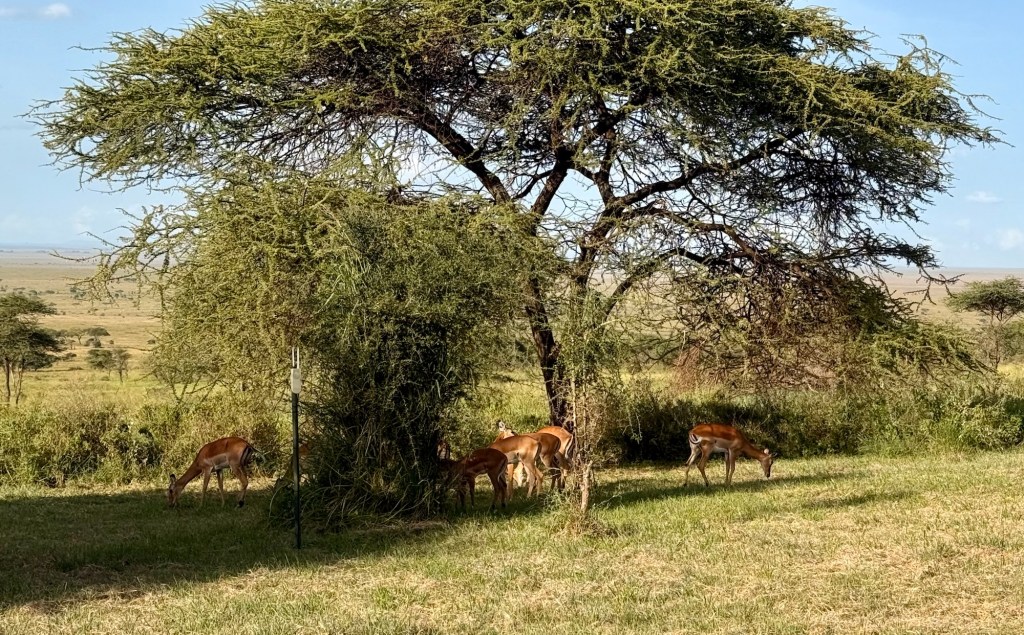
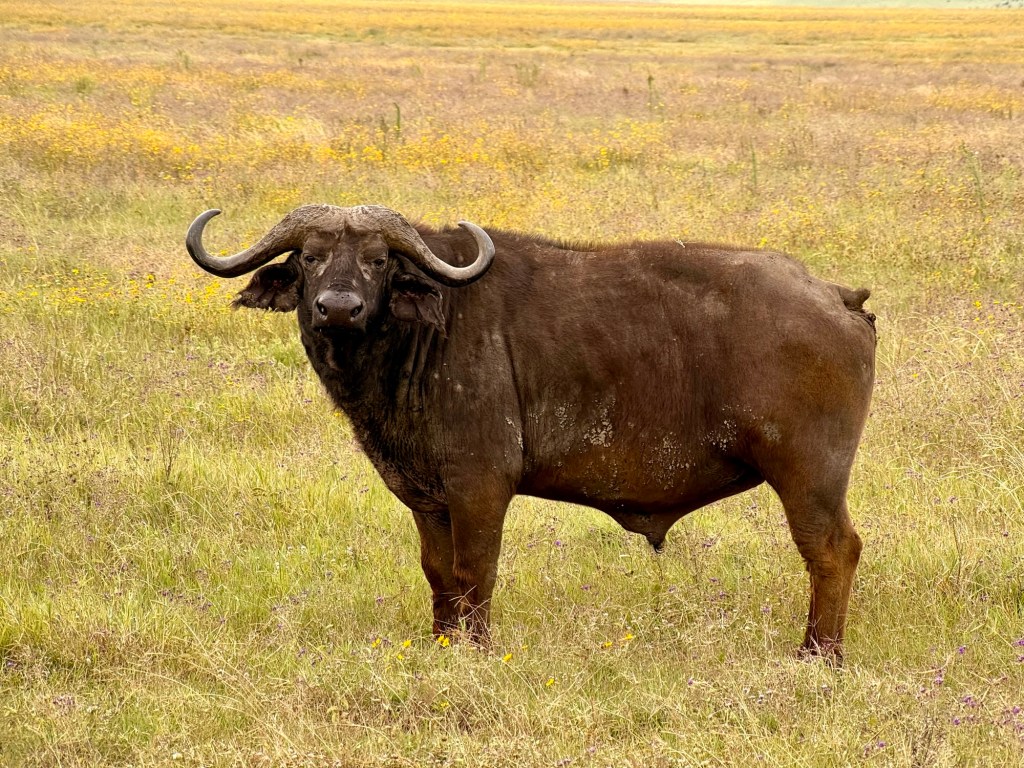
Ok, back to my story. We left our site and headed out over treacherous roads (single dirt track with lots of ruts and mud holes to manoeuvre around…Thank you David for driving!!… and I thought our drive to our last camp was death defying! Anyway, we got on the road at about 7:15. Not only did we have a very long day with lots of driving, but we needed to get out of Serengeti Park at the same time we entered a few days ago which was about 8:30 am. Easy if you’re trying to do it on good roads…not so easy if your trying to make time and a) not flip the car and b) not take out any passengers or animals at the same time! We did see a jackal and a herd of buffalo, a vervet monkey and 3 hot air balloons along with the ubiquitous zebra and wildebeest on our way out of the park.
We managed to get to the gate just in time. Interestingly, we no sooner left the Serengeti National Park then we entered Ngorngoro National Conservation Area. ( the difference is that no humans can permanently live in a park, but the government let the Maasai people live within the Ngorongoro Park, just not within the crater itself).
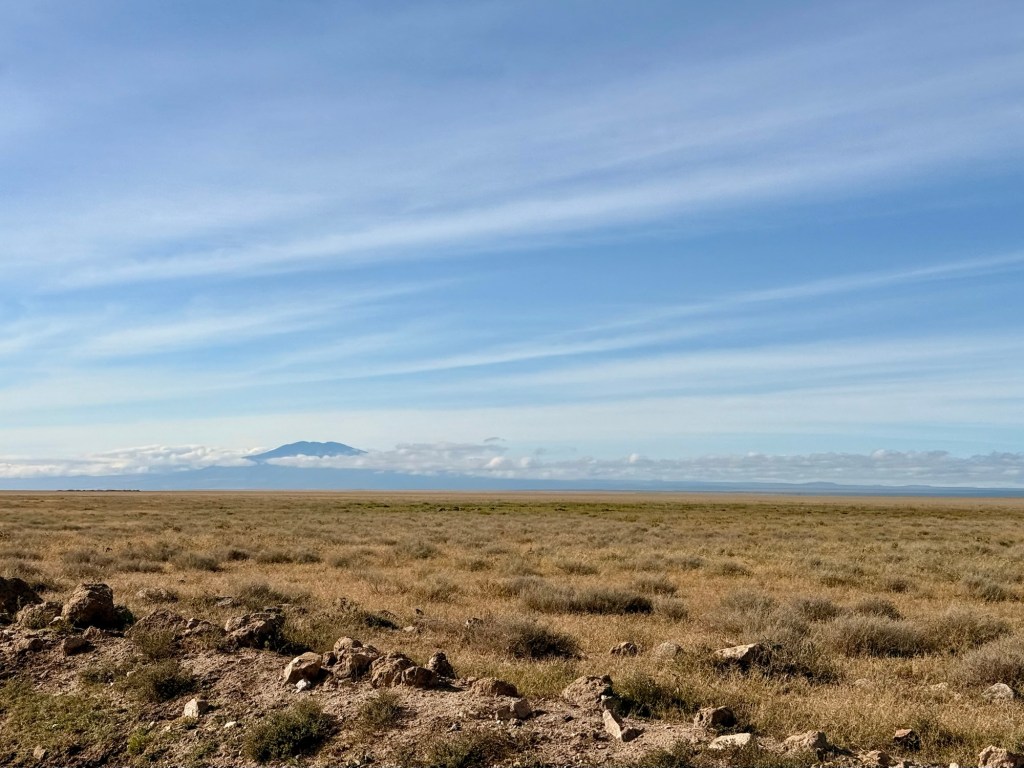
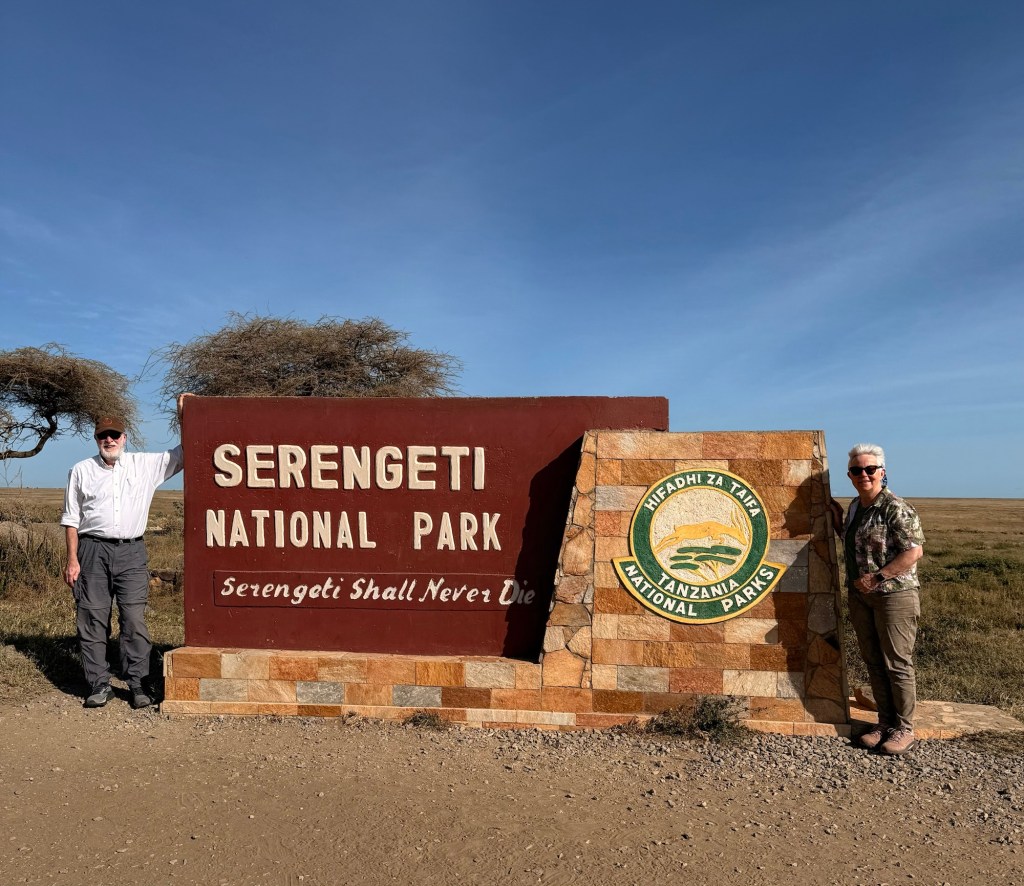
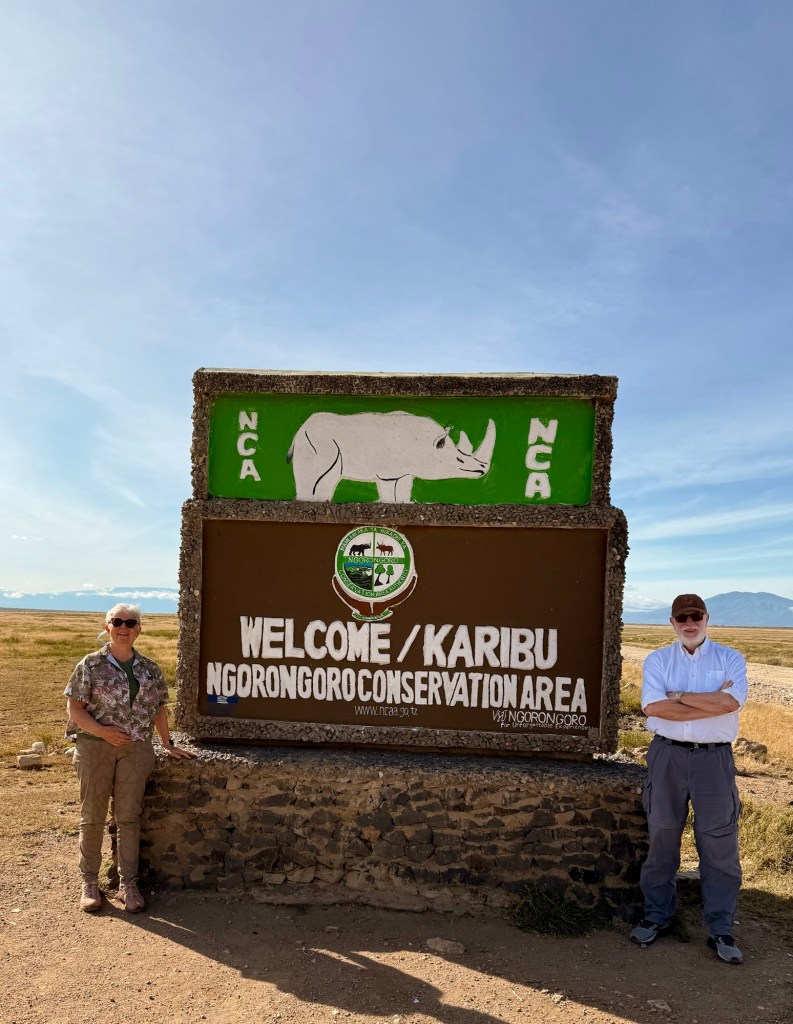
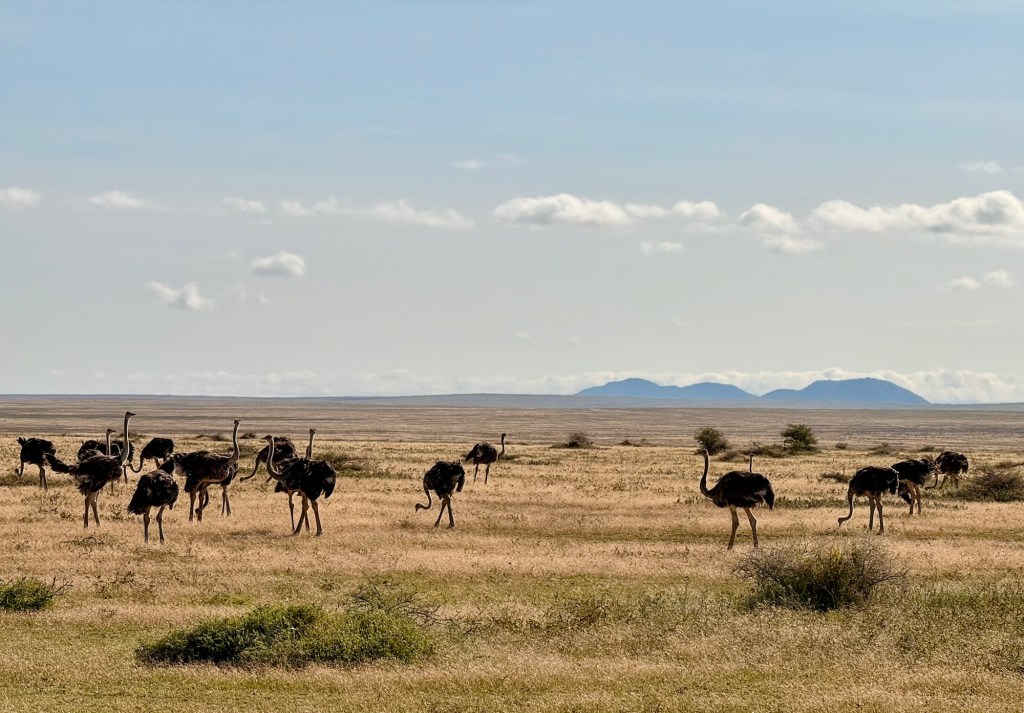
Through the plains we did see some animals, as well as herds of cattle and goats managed by various Maasai people
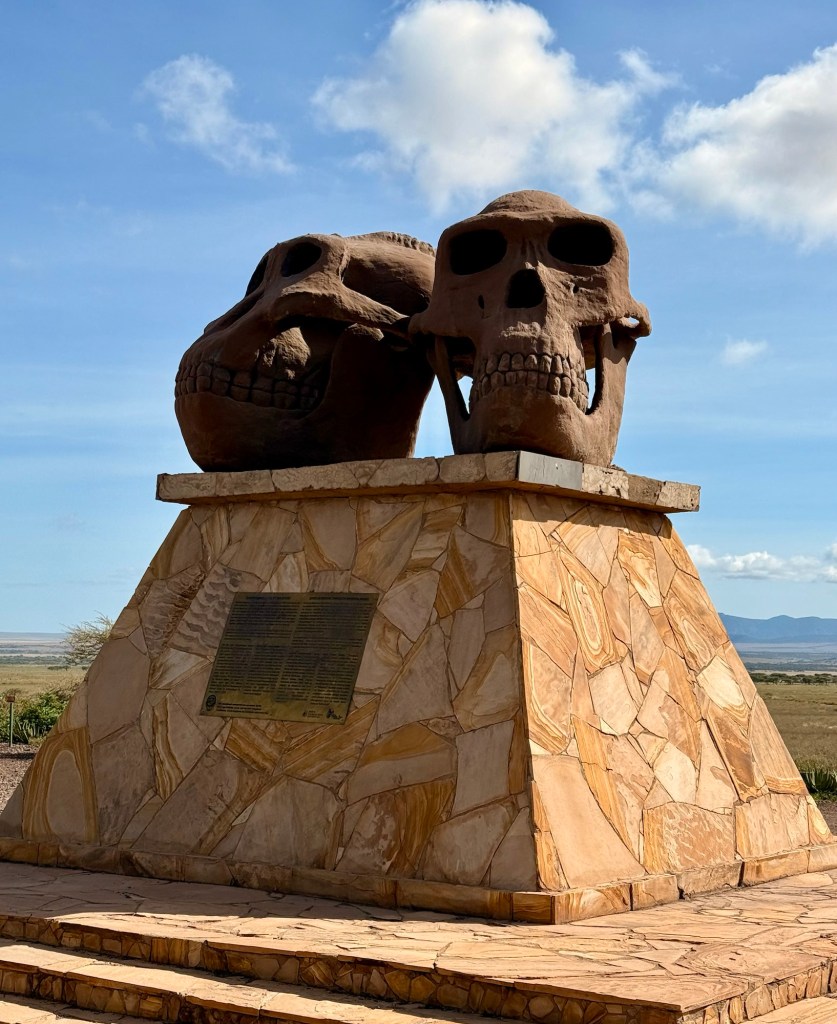
As we drove across the plain we also stopped at the place where “Lucy”, the first human remains were discovered.
We soon crossed the plain, not before seeing the remains of a head on collision between 2 safari vehicles yesterday that continued to block the road. David said the amount of dust thrown up causes a whiteout effect that blinded the drivers. We took it reasonabley slow!
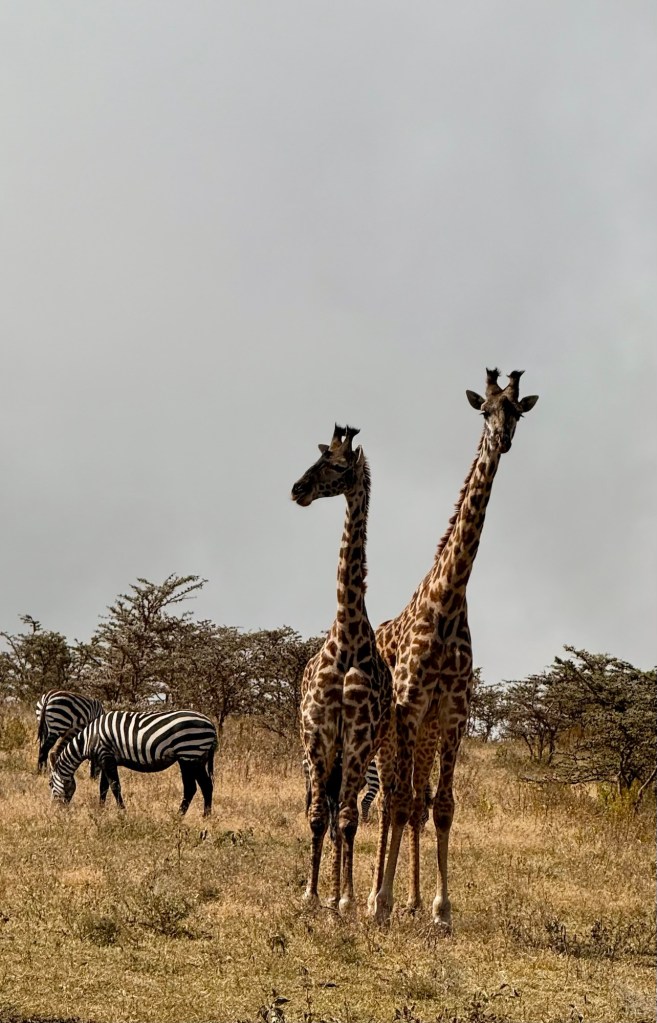
Once across the plain we passed through a gorge and then up a steep climb to the rim of the crater. At the top we found a number of giraffes grazing on their favourite “thorny Acacia”.
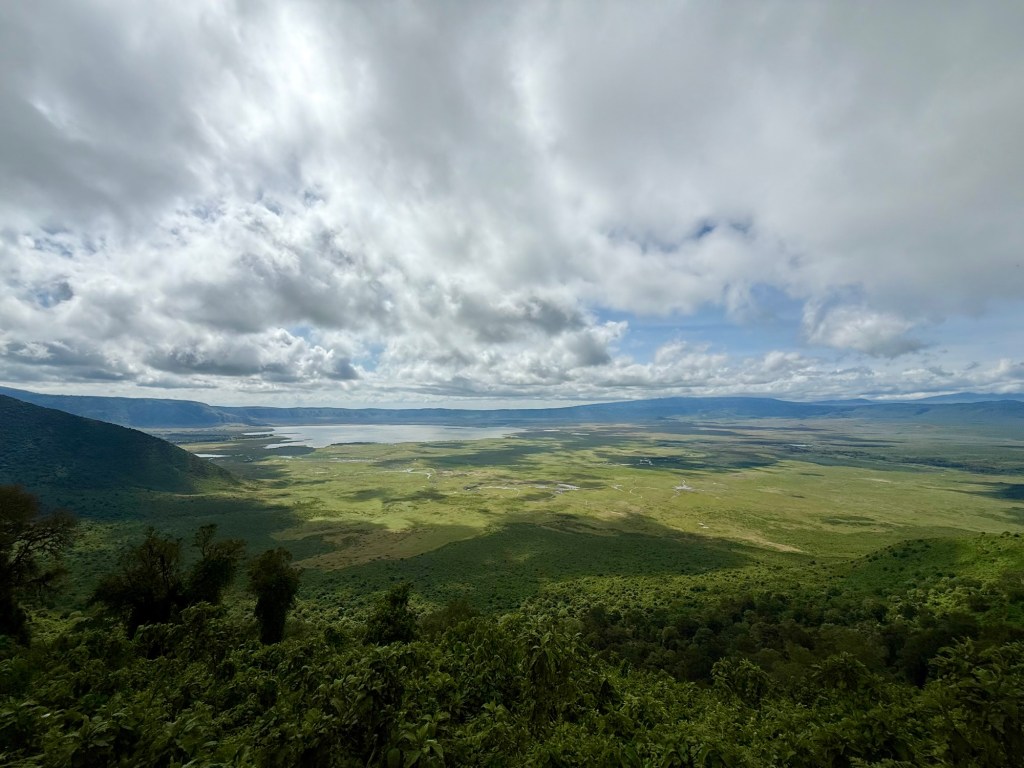
Finally, we were at the top of the crater and ready to enter the park. Here’s our view of inside the crater from the elevated washroom area at the entry gate!
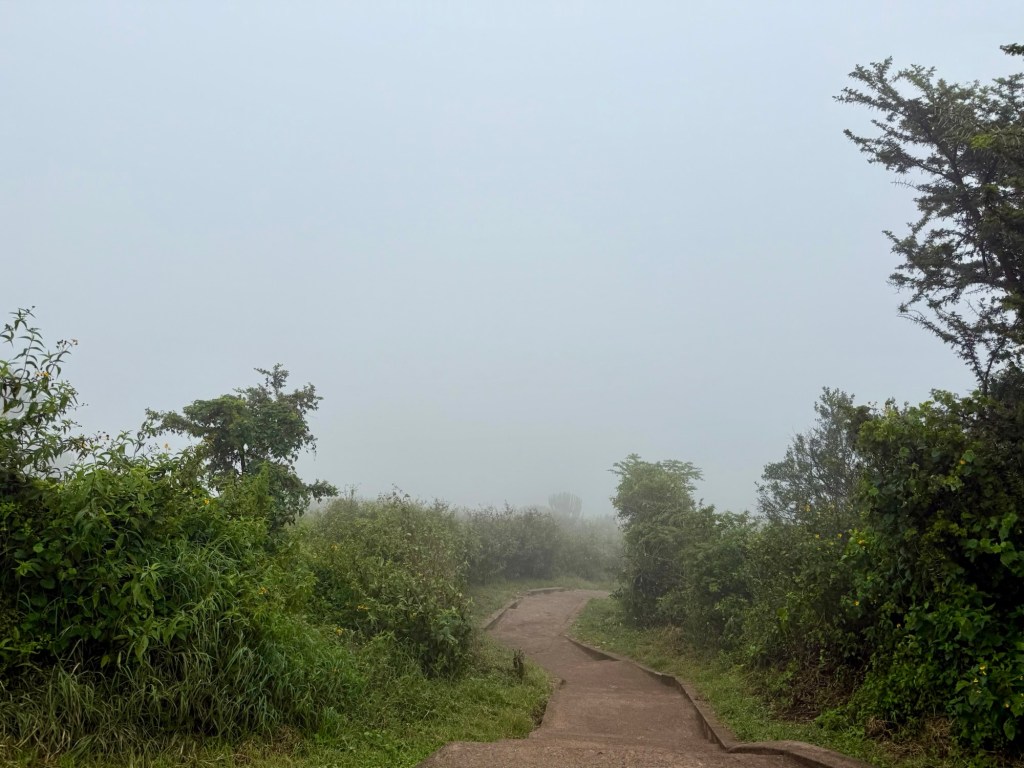
As we descended, we dropped beneath the clouds and saw the beauty far below us. We could see a large lake in the middle of the caldera, and were told that this is a salt lake that normally has tens of thousands of flamingos living here, but alas almost all of them had migrated north to breed. My heart sank, until David told us that there were still a few who remained! Let’s go see them, I said!!!

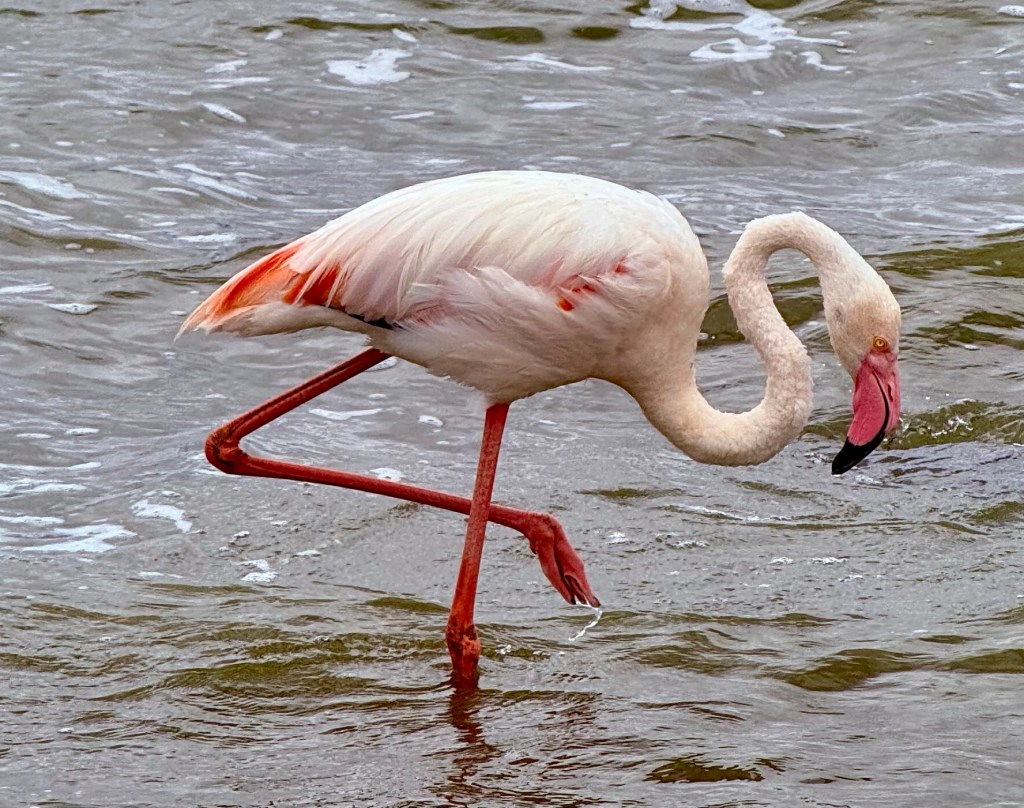
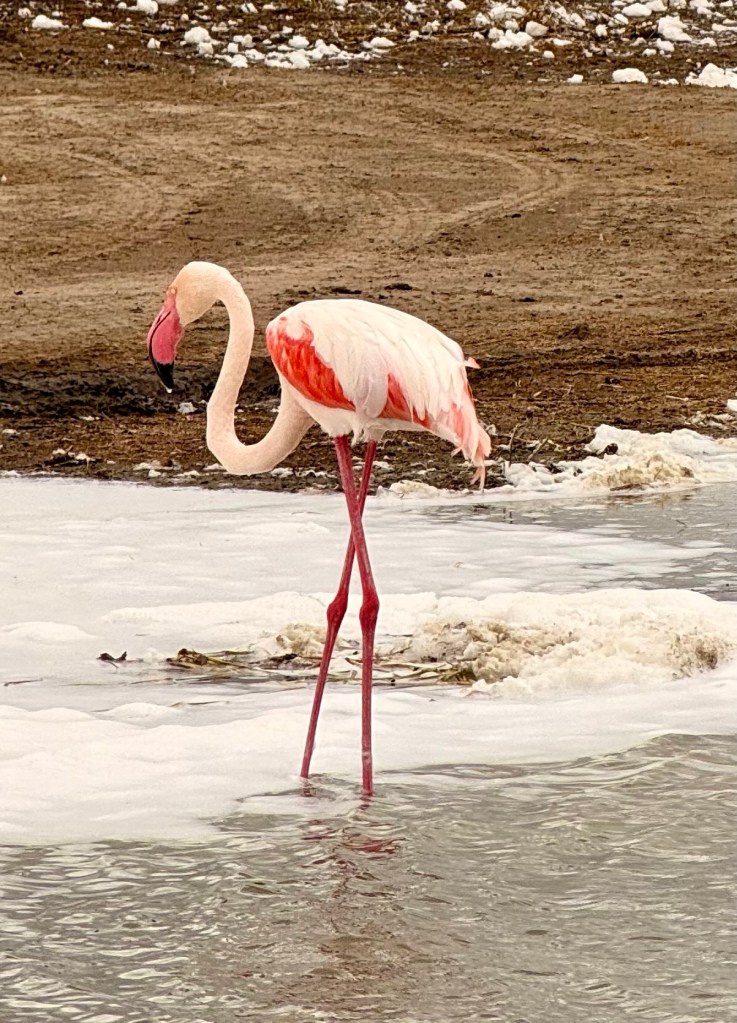
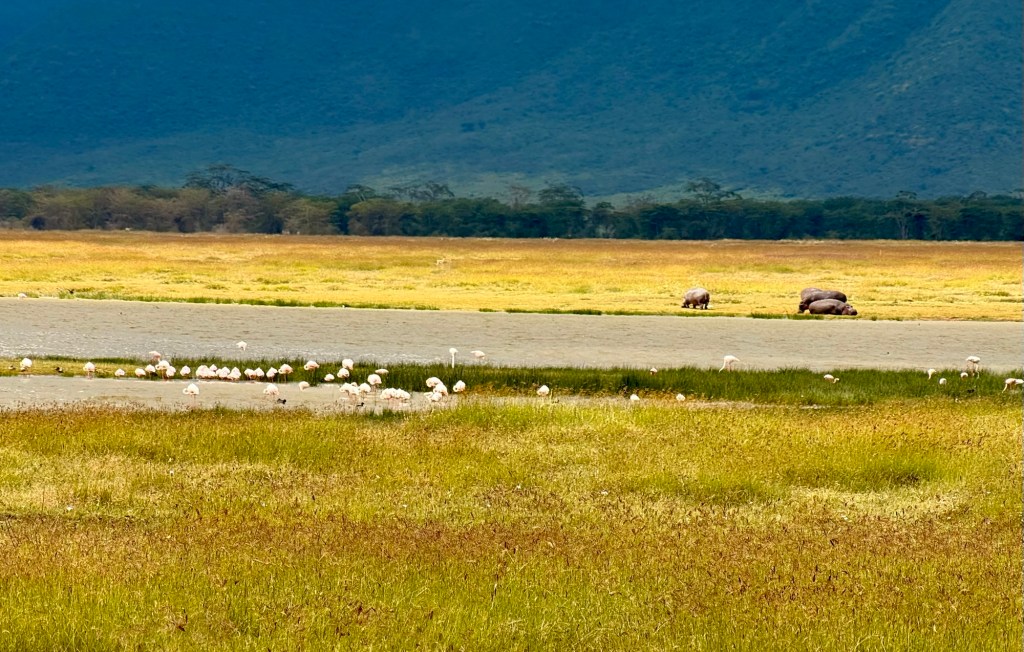
While they weren’t there by the thousands, they were still beautiful as they fed on the algae and small crustaceans that make then turn pink.
After our stork viewing we set off to see the last of our big 5, the Rhino. The Big 5 include Lions, Leopards, Buffalo, Elephants and Rhinosauruses. These named because they are the most dangerous animal to hunt. In the parks here, the only shooting is done with cameras!
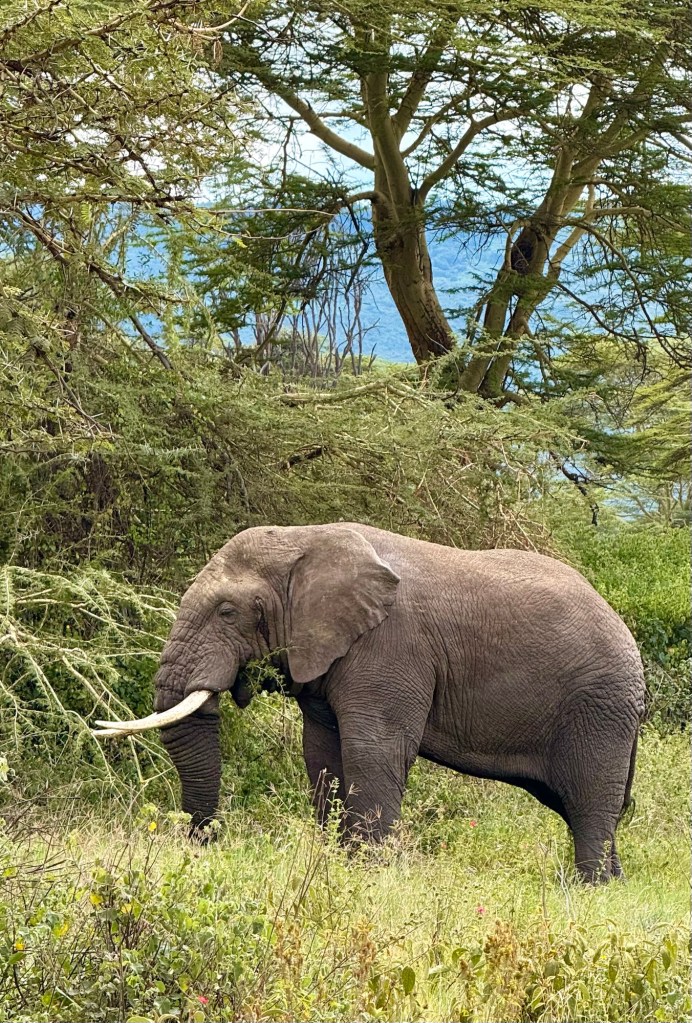
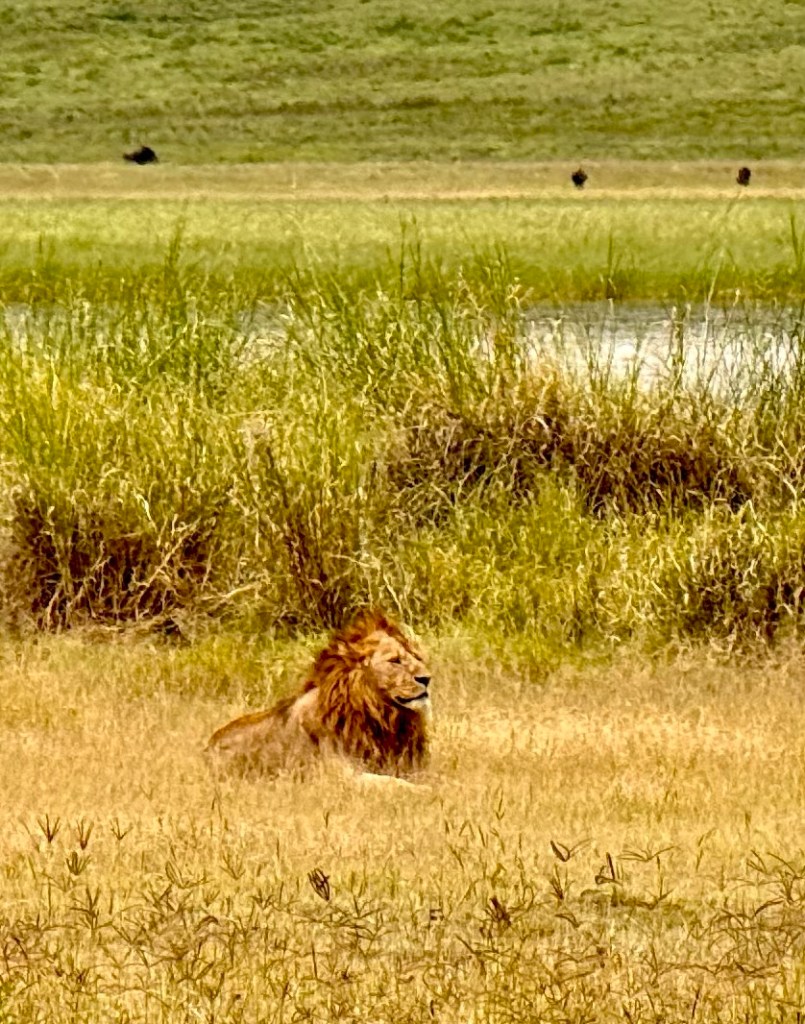
As we ventured on our way we saw a number of birds, including a white billed bustard, a marabou stork, grey-crowned cranes, sacred ibis and a huge flock of great white pelicans! mixed in for some fun, we also saw a beautiful elephant, as well as some more buffalo and a male lion!
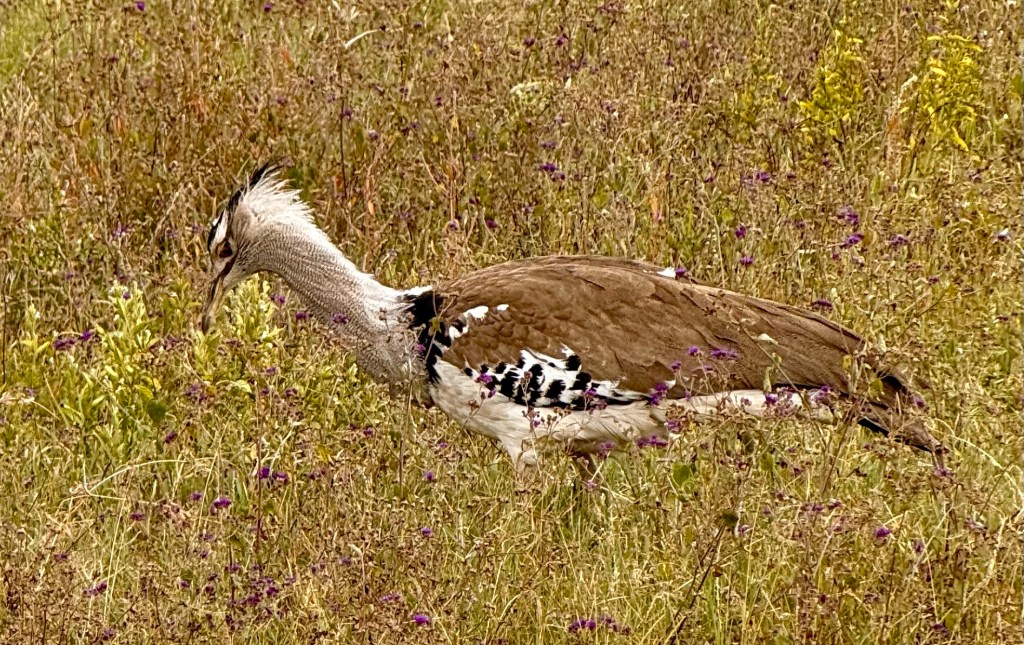
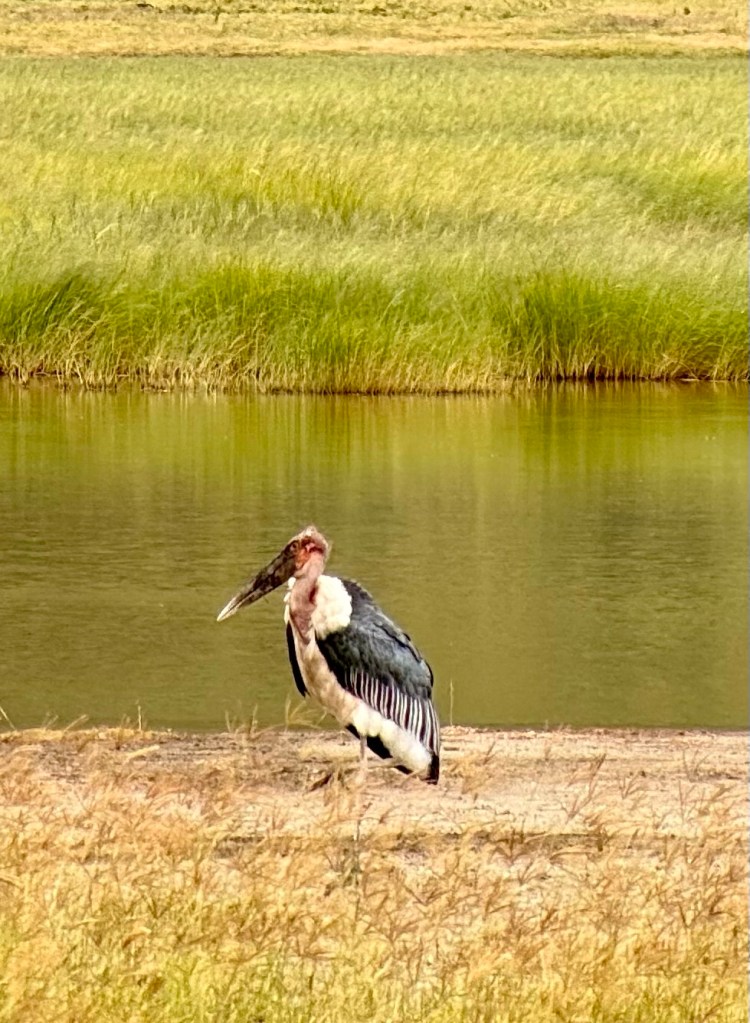
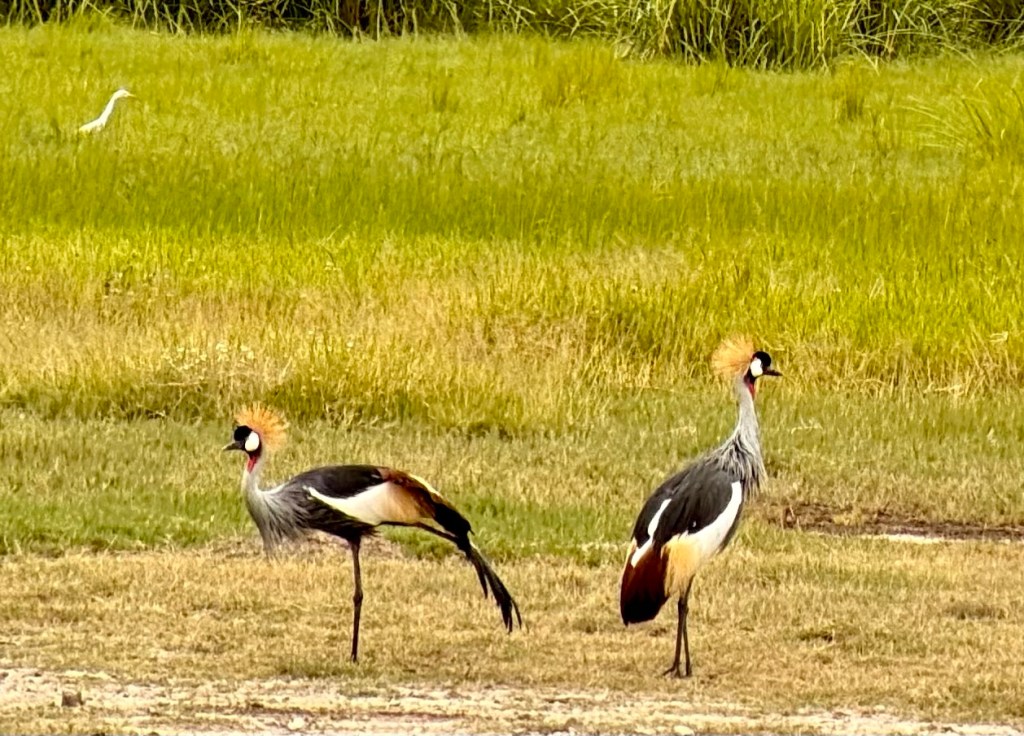
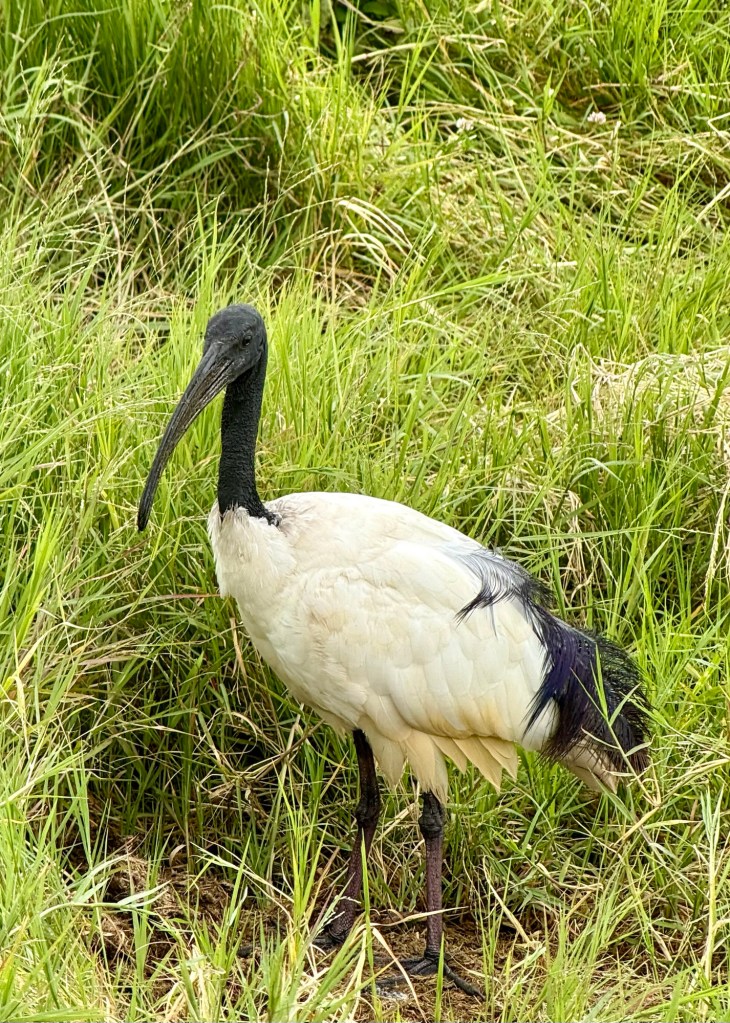
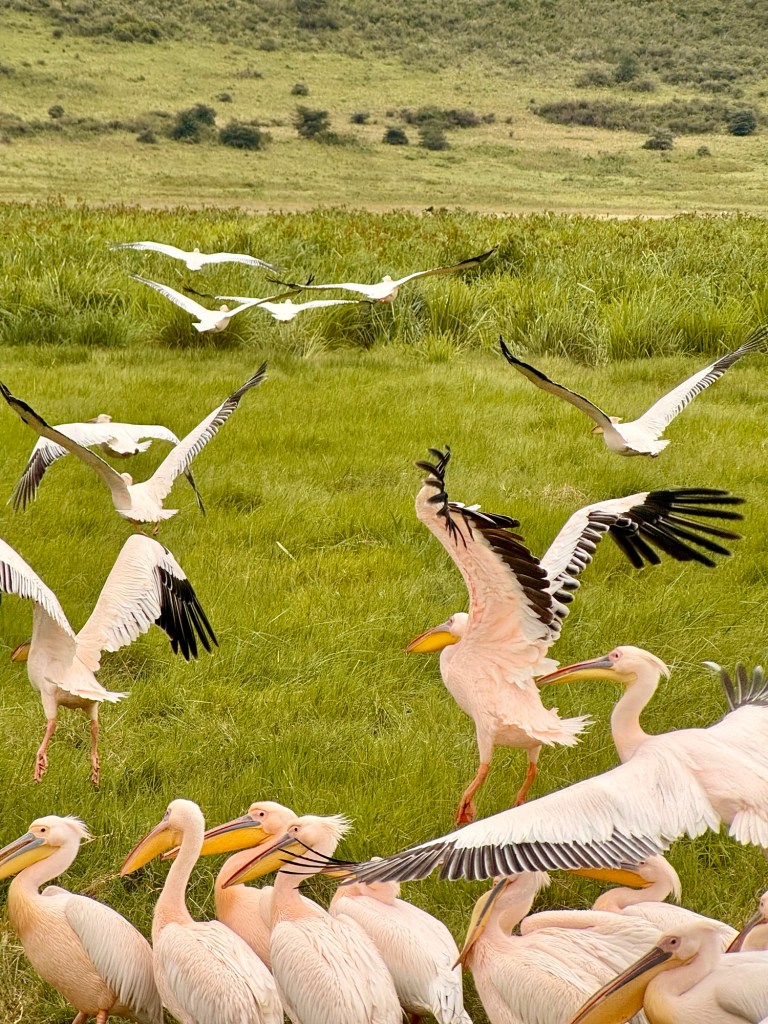
Of course, by the water we saw a few more flamingos kept company by a number of hippos lounging in the tall grass beside the water. It was cool enough and with the cloud cover they could actually get out of the water and graze during the day.
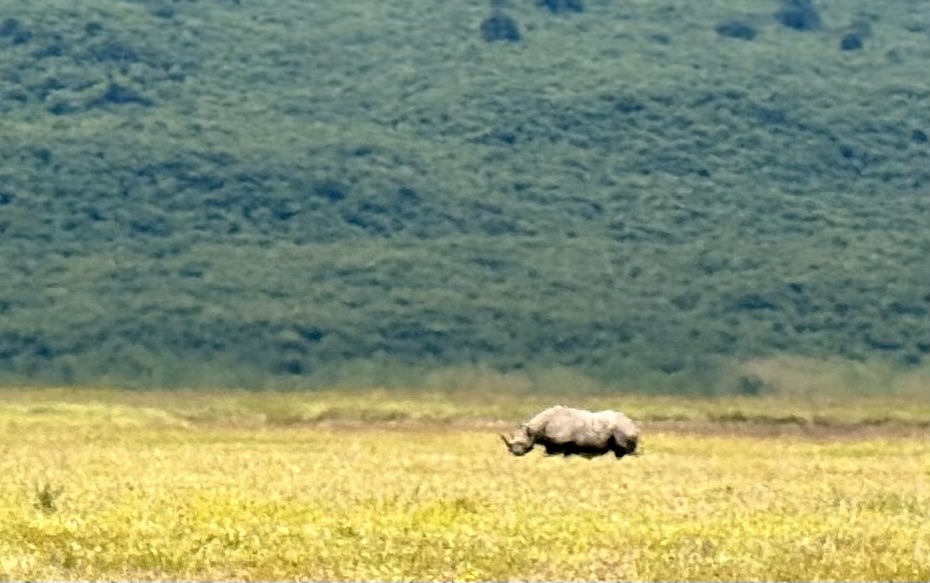
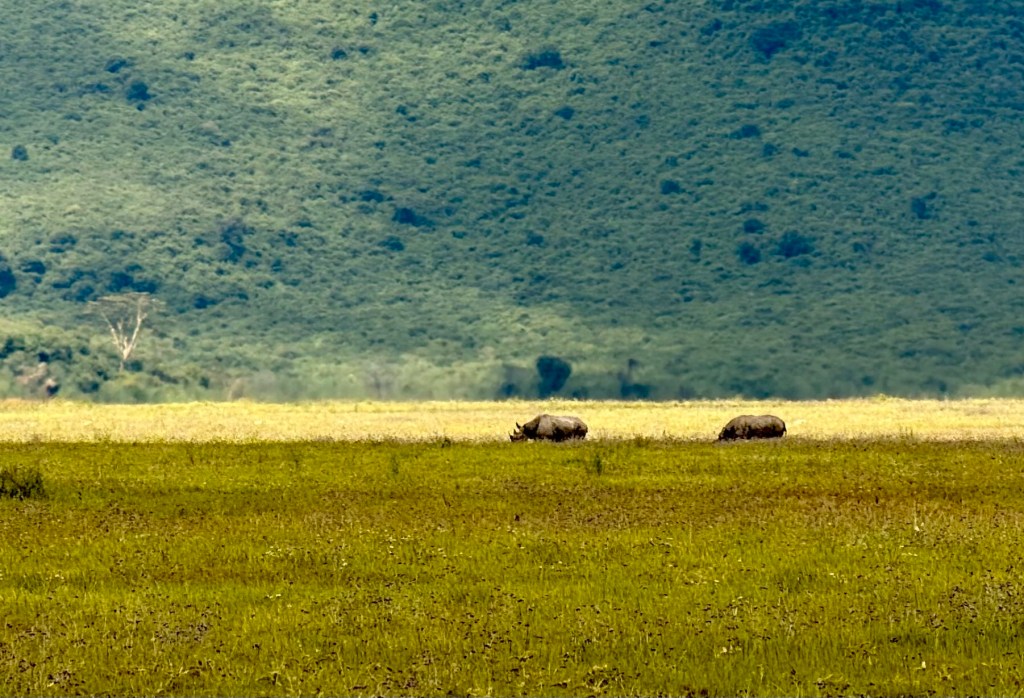
We started down another trail and at long last spotted three black rhinosauruses . They were grazing in the long grass far in the distance. Sorry for the quality of photo, but try as we might, we couldn’t get closer to these elusive creatures.
After this last sighting it was time for lunch. Although, I can’t think for the life of me, what would make us hungry when we are sitting in a vehicle all day!
After lunch, we headed out of the gorge. It had been a wonderful experience, but we still had another 150 km left before we would arrive at our final camp for the next 2 nights – Honeyguide Tarangire Camp.
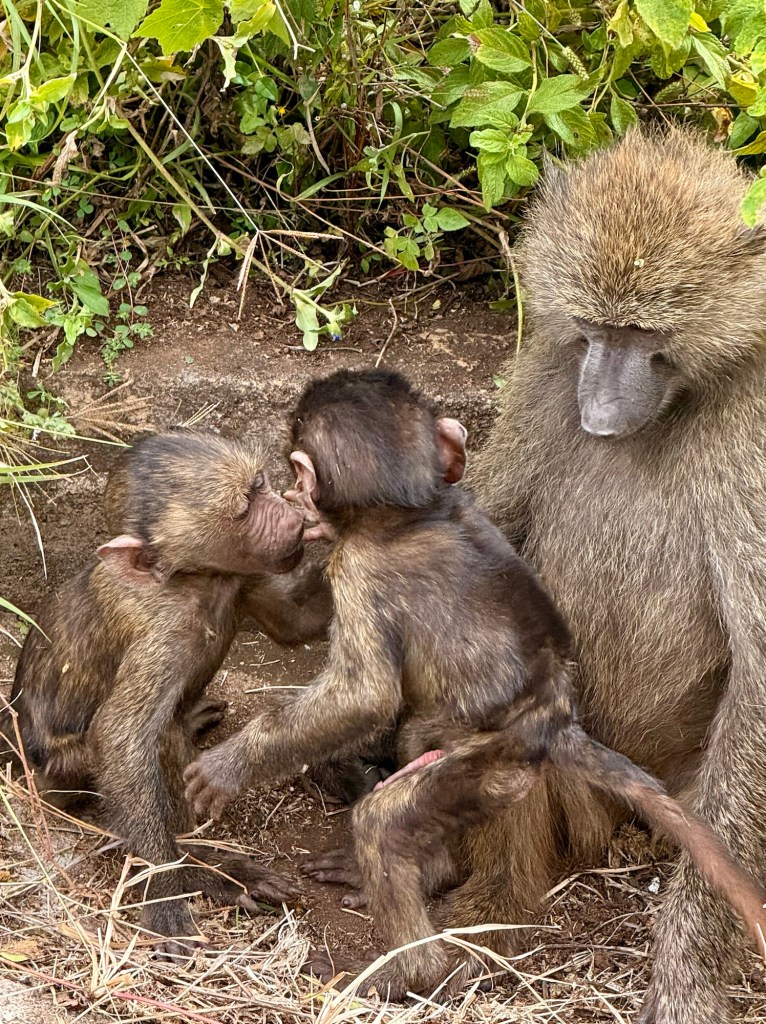
We drove up the hair raising one track road (no worries, there was one road for the descent and another for the ascent). As soon as we started up the ascent we came upon this large group of baboons with a number of young.
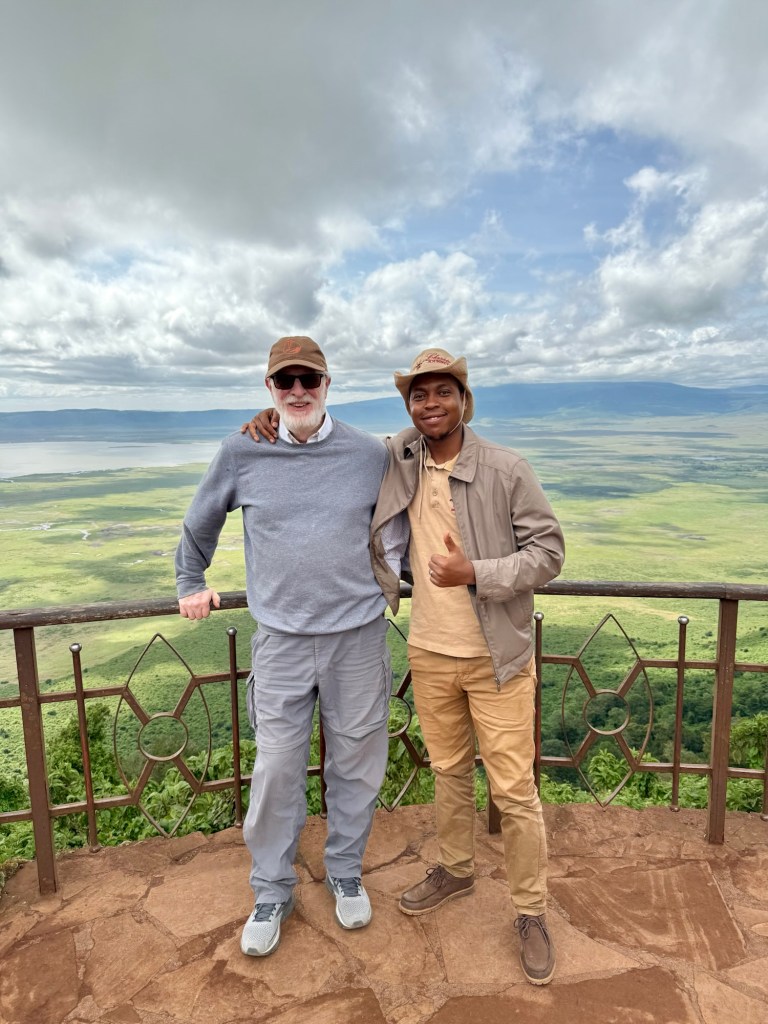
Up, Up we went! The winding path was a challenge with road grades reaching over 11% at times. I’m just glad the sun was out and the roads were fairly dry! we finally made it to the top and, with shaky legs, got out for a photo op!
As we left the park boundary we joyfully drove on paved roads. Along the way we passed though several towns and cities and soon found the turn off for the Tarangire National Park. Back on typical park single track variable quality road (a 4X4 is a must for any of these parks) we wound our way to our new home.
Honeyguide Tarangire Camp is a tent camp, again not like our back country camping, but quite more like glamping! Here’s a look at our accommodation for the next 2 nights.
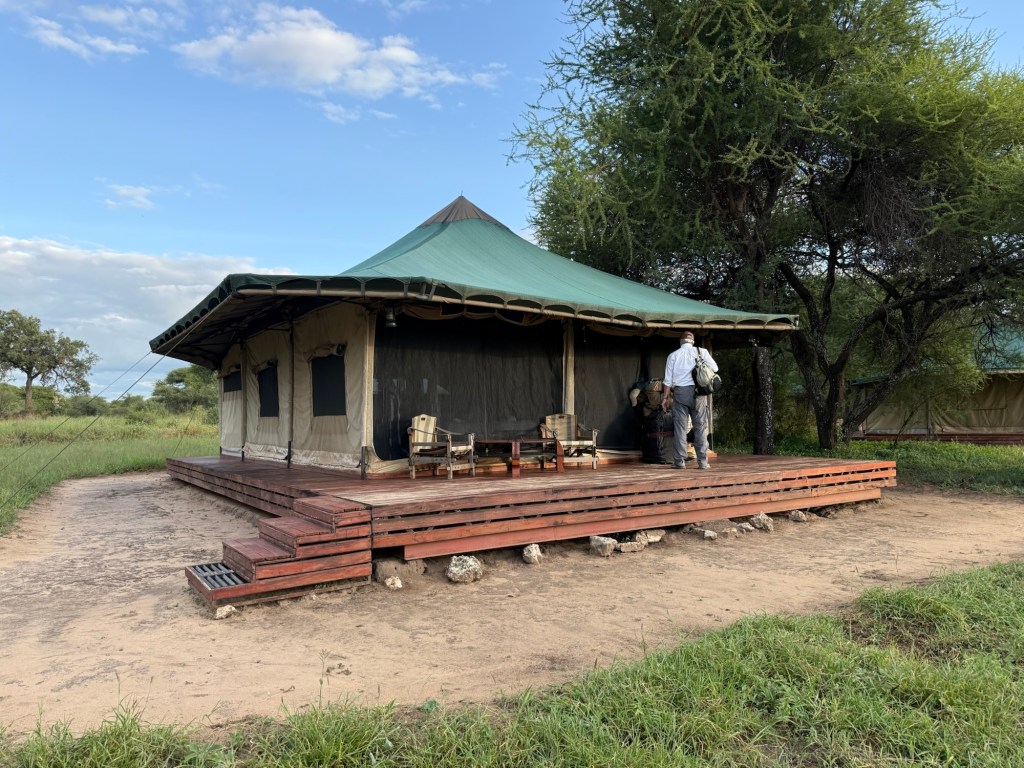
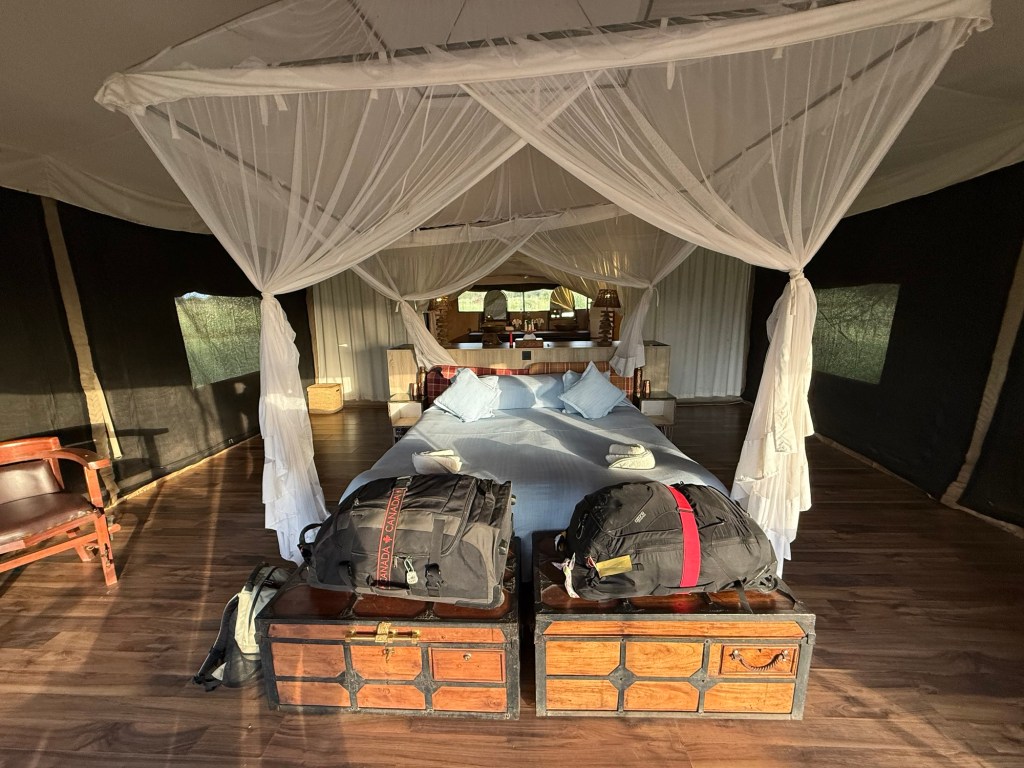
It’s been a long day, so will sign off for now! Chat with you tomorrow.
 Pat and Dan Making Tracks
beautiful photos you have taken on your trip. The animals you have seen are amazing. I would love to see the flamingos and the other birds you have seen…can you tell them to fly to brockville for me..🤞😉. What a wonderful adventure you both of had. ☺️
LikeLike
Beautiful photos of you trip! All the amazing animals you have seen! I would love to see the flamingos and the other birds. Please tell them to fly to brockville..😉😂. Enjoy the last few days you have in Africa what a trip you both have had. 😊
LikeLike
What an amazing trip you have had so far! The amazing animals you have seen. The photos are beautiful. I love the bird pictures. Please tell them to fly to brockville so I can see them..😉😂. Enjoy your last few days in Africa.
LikeLike