
Sunshine greeted us again this morning, however, the outlook is for clouds. No rain though, so we can’t complain. Our last few days have been glorious weather wise.
Touring these battle sites makes me reflect on the incredible loss of life. It’s hard to go a few kilometres without seeing a memorial gravesite of some kind. When we were at Tyne Cot yesterday, I saw a statement that said, “they died for King and Country and that their valiant efforts would live on through generations”, and a rebuttal from one mother was, “but I must live with the loss of my son”. How true this was for millions of families working through their own personal losses.
Once again, we headed back to the Vimy memorial. This time, bright and early to try to avoid any crowds. While the visitors centre opens at 10 am, we arrived at close to 9:15, giving us lots of time to explore this overwhelmingly impressive structure.
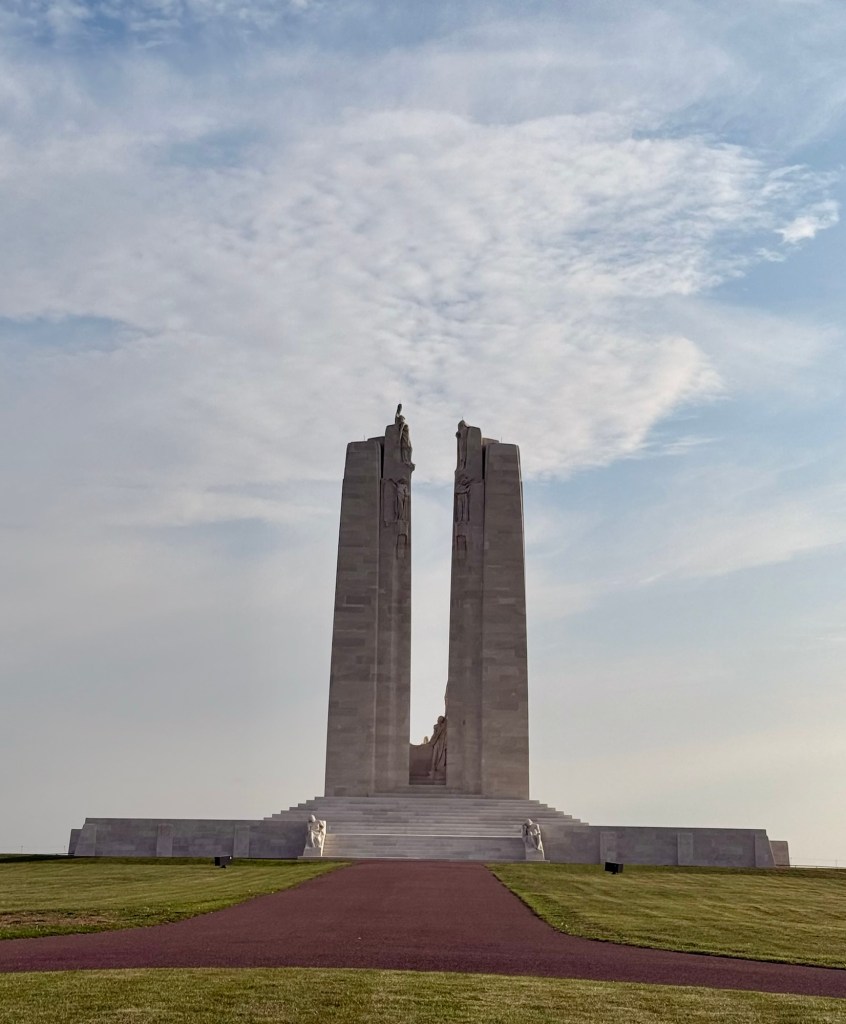
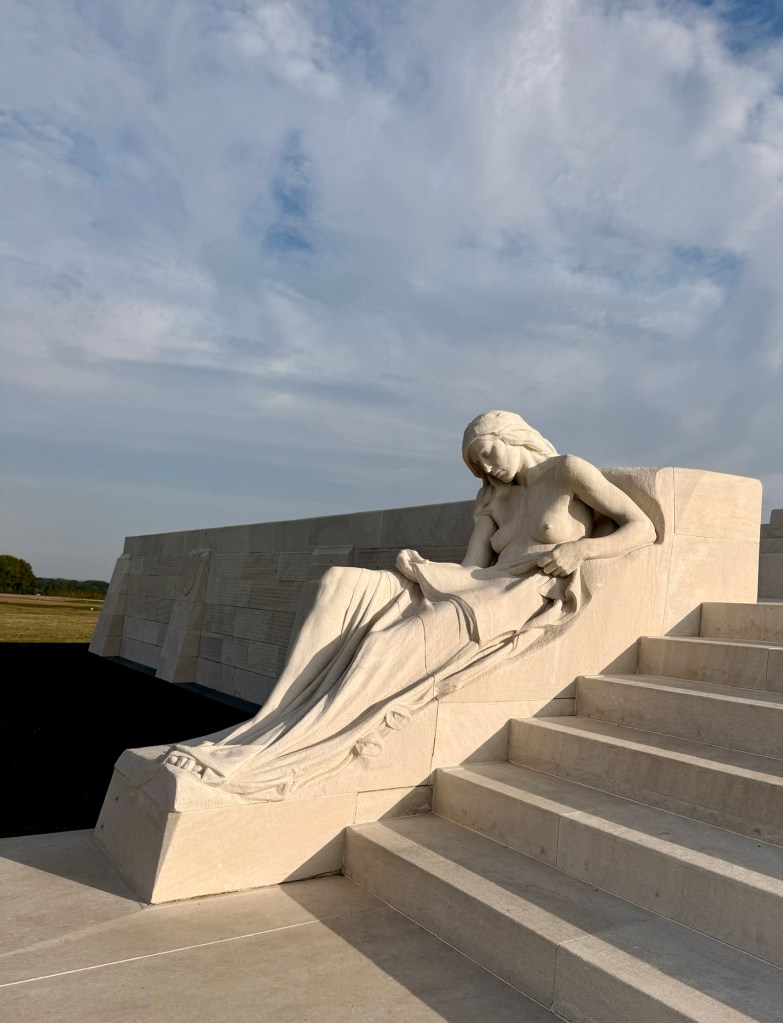
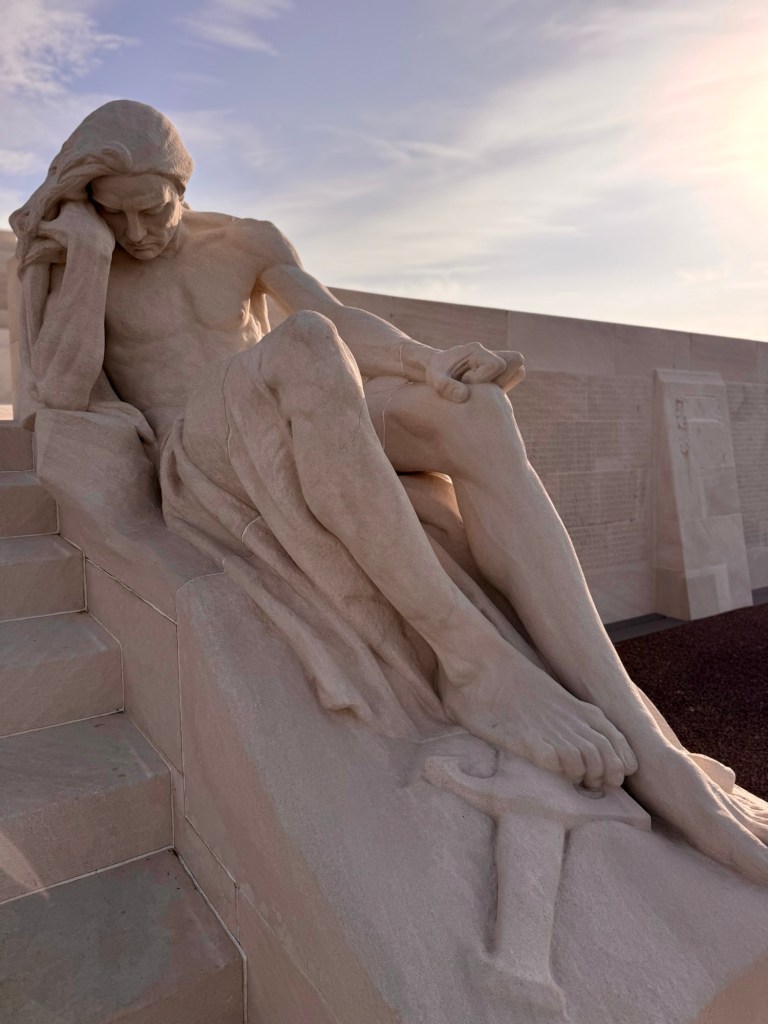
The entrance onto the monument from the parking area is actually the Back of the Monument. On the front, I saw a statue that almost brought me to tears. “Canada Bereft”.
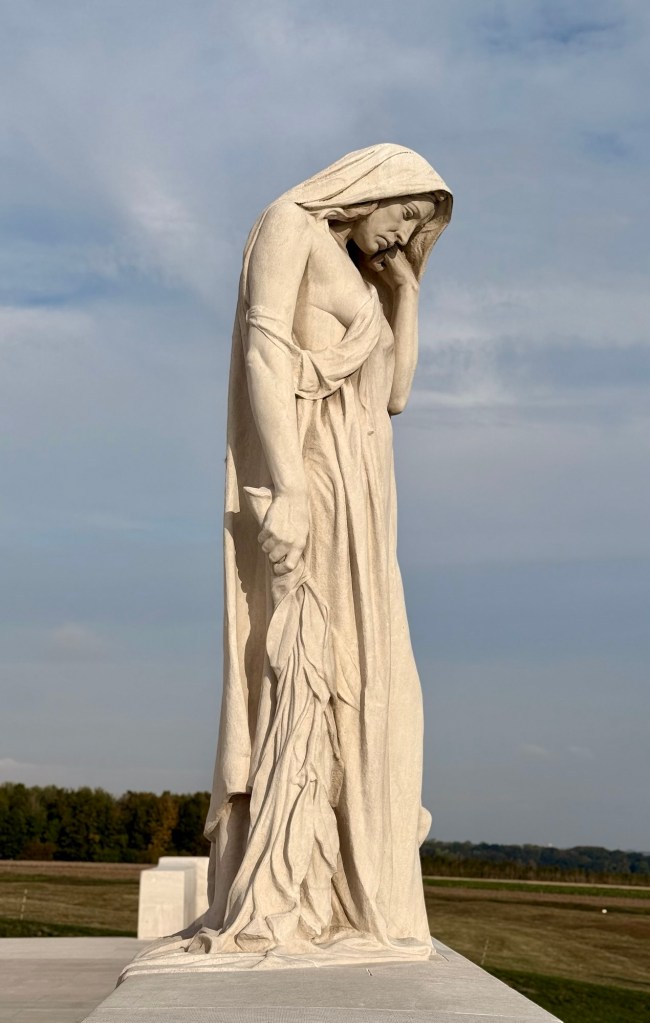
Behind her stands “Sacrifice” with “The Torchbearer” standing behind him.
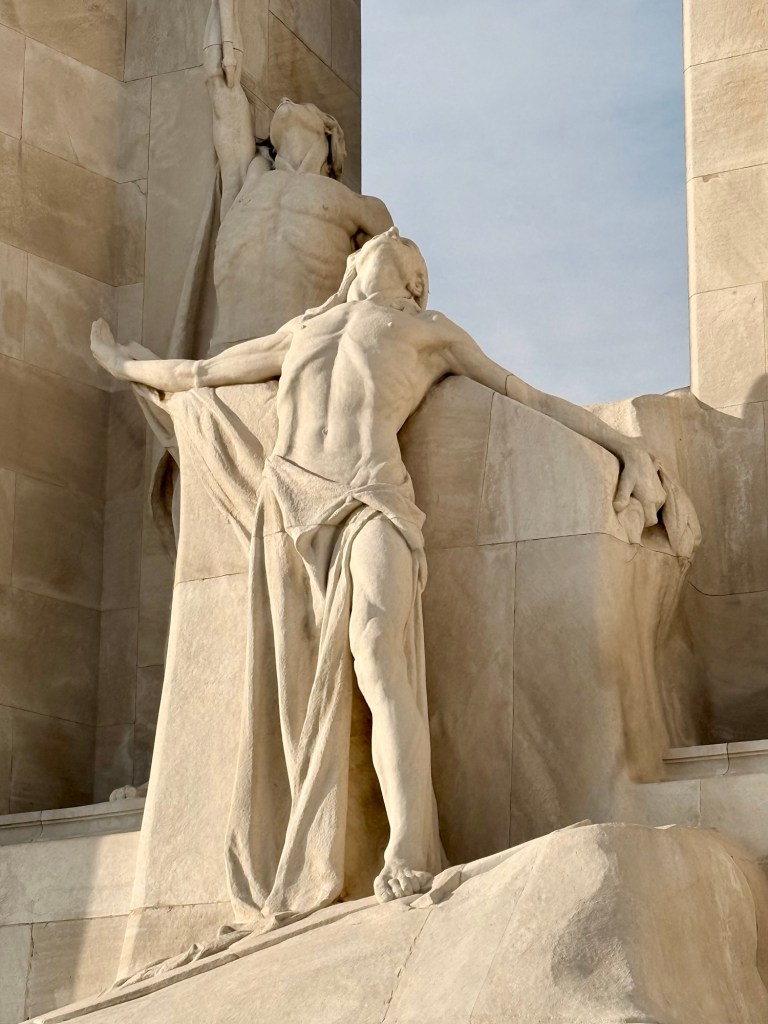
At the top of the column the sculptures are “Faith”, “Hope”, “Honour” and “Charity”.
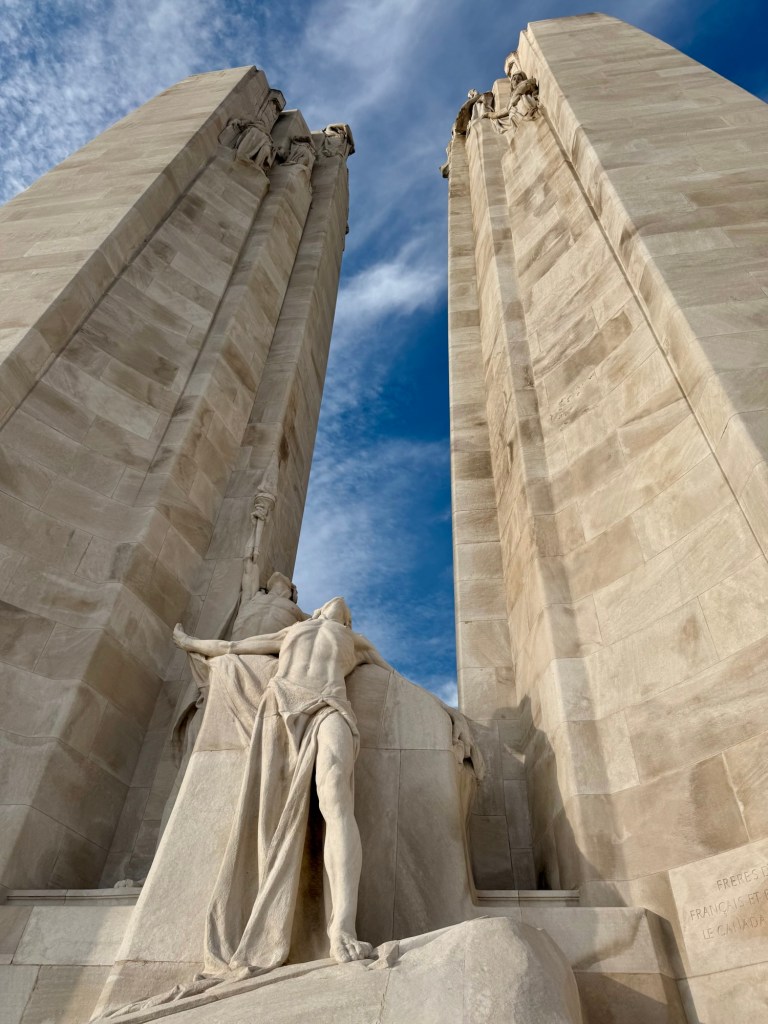
We were spellbound by the magnitude and the beauty of this monument. Nothing we have seen to date on this tour comes close to the emotional impact and message left by this.
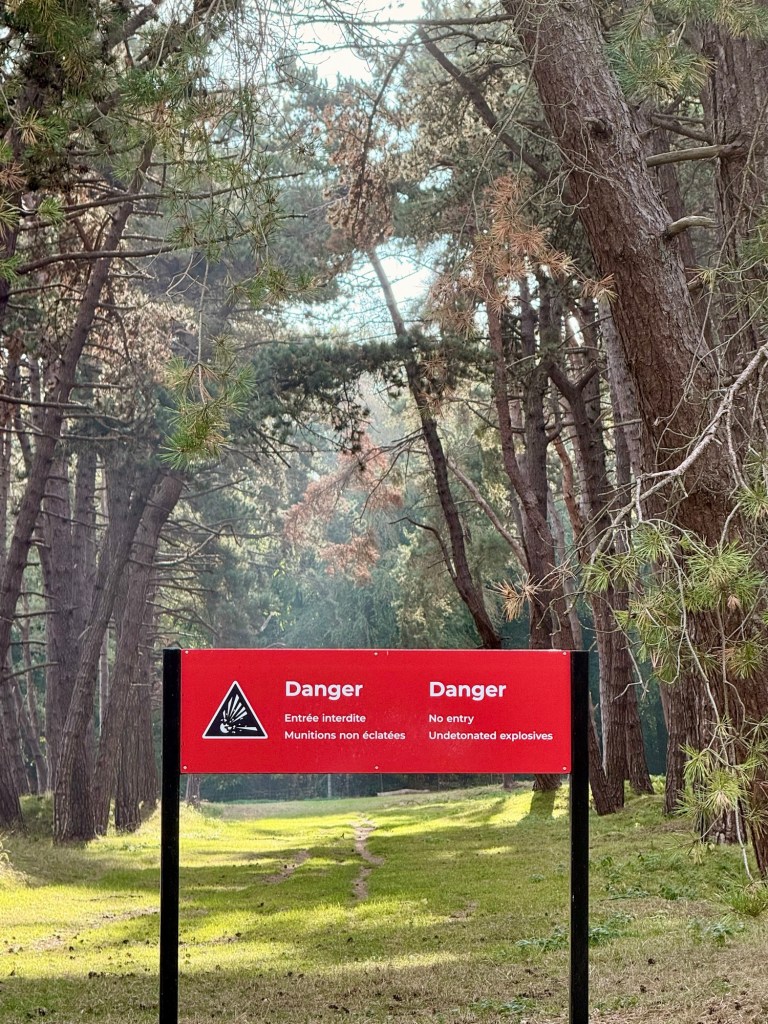
Once we had absorbed all we could from this magnificent work, we headed to the Visitors Centre, about 14 minute walk from the monument. By the way, the property takes up over 280 acres and includes a great deal of land left in its original state after the war. To this date you cannot walk through the battleground freely as there is still risk of undetonated explosives here. The pathways are lined with electric fencing to deter wanderers.
We soon arrived at the visitors centre and were greeted by one of the cheery students doing a placement with veterans affairs. We asked if we could have a tour of the tunnels and were given tickets for a 10 am tour. (All of this is free, and no gift shop!)
Dan and I had a private tour with Della, a student here from U of Ottawa. She was delightful, and gave us a a quick orientation to let us know we would be going underground… if at anytime we felt uncomfortable, she would bring us right up. We were all good, so she took us down the entrance stairs and unlocked the door to the tunnels.
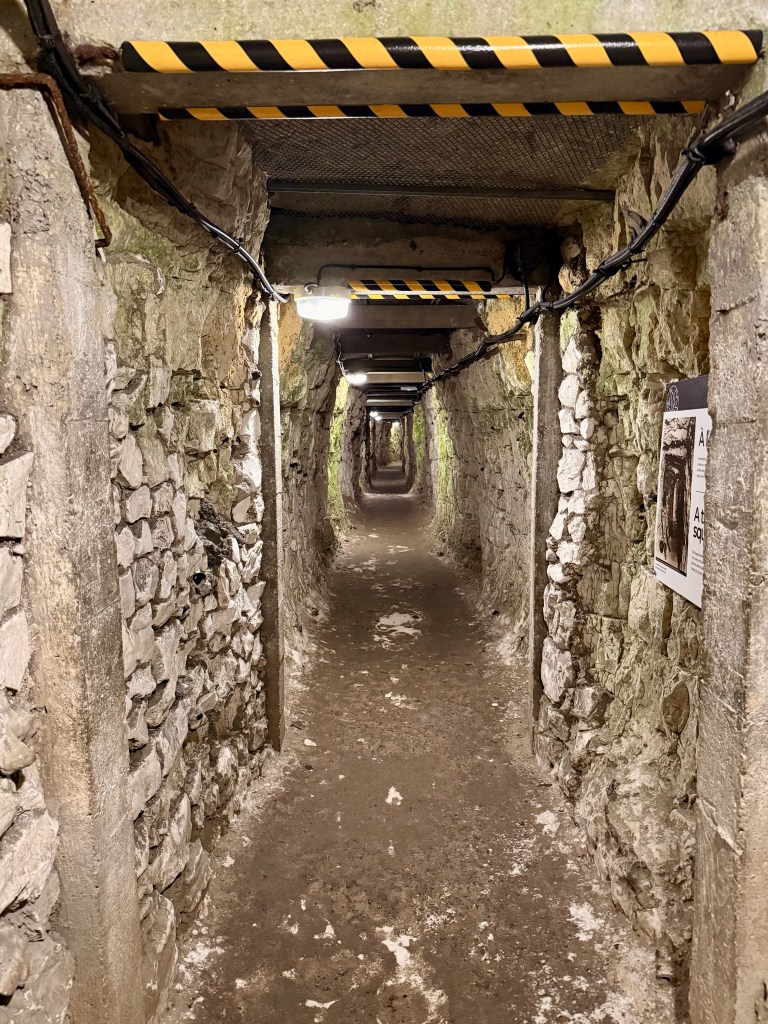
They have widened and reinforced the tunnel for tours. Also, modern lighting made it quite bright. Della then, with our permission, turned off the lights to show us the actual lighting used there.
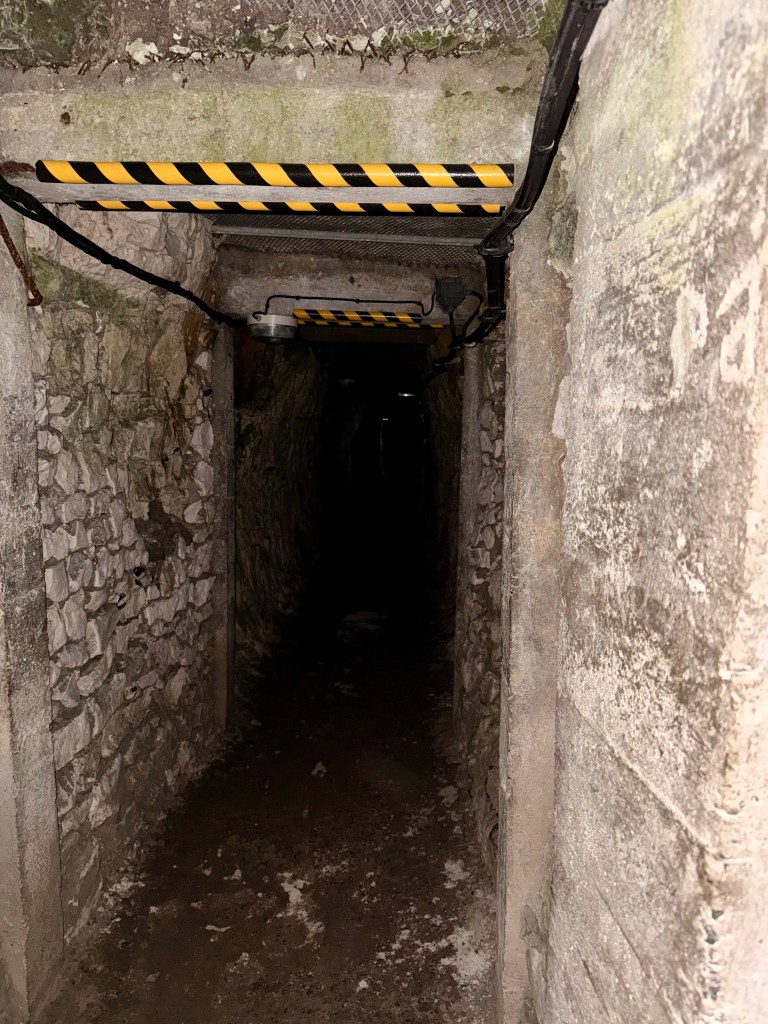
But these tunnels, while following the original paths had been enlarged for tourists… wider and a little taller. The tunnels at this level were primarily for officers and communication runners.
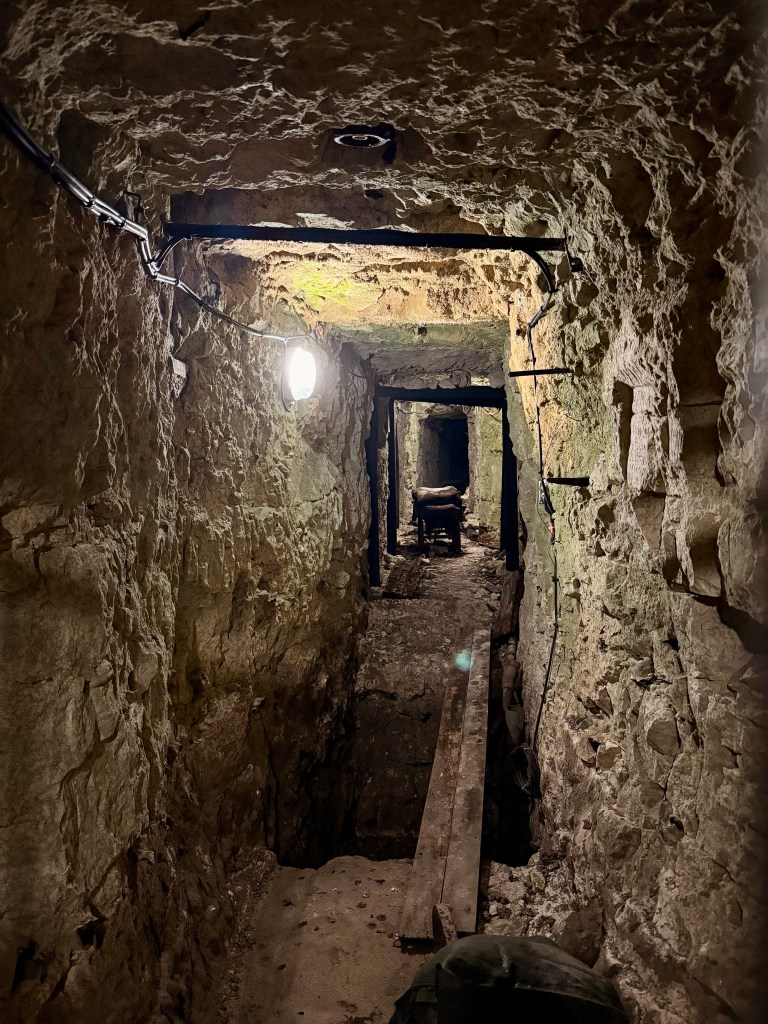
The actual battle tunnels were much deeper, up to 30 metres below grade. They use these to set explosives under enemy positions, or in the case of the Canadian planned attack some 18,000 soldiers packed in 650 per advance tunnel. These tunnels were opened by the sappers when the orders were given to attack.
The French had been trying to gain ground here for a couple of years, losing over 200,000 in this fight alone. Next the British tried and failed. Finally all 4 Canadian divisions under Canadian command were given a chance at this target. They employed a rolling barrage ( artillery would fire over the heads of the advancing troops to try to clear the land, the men would advance further, then take cover as another barrage fired a little further ahead.). This leapfrogging technique worked and earned Canadians great trust as a fighting force. They took the ridge in 4 days.
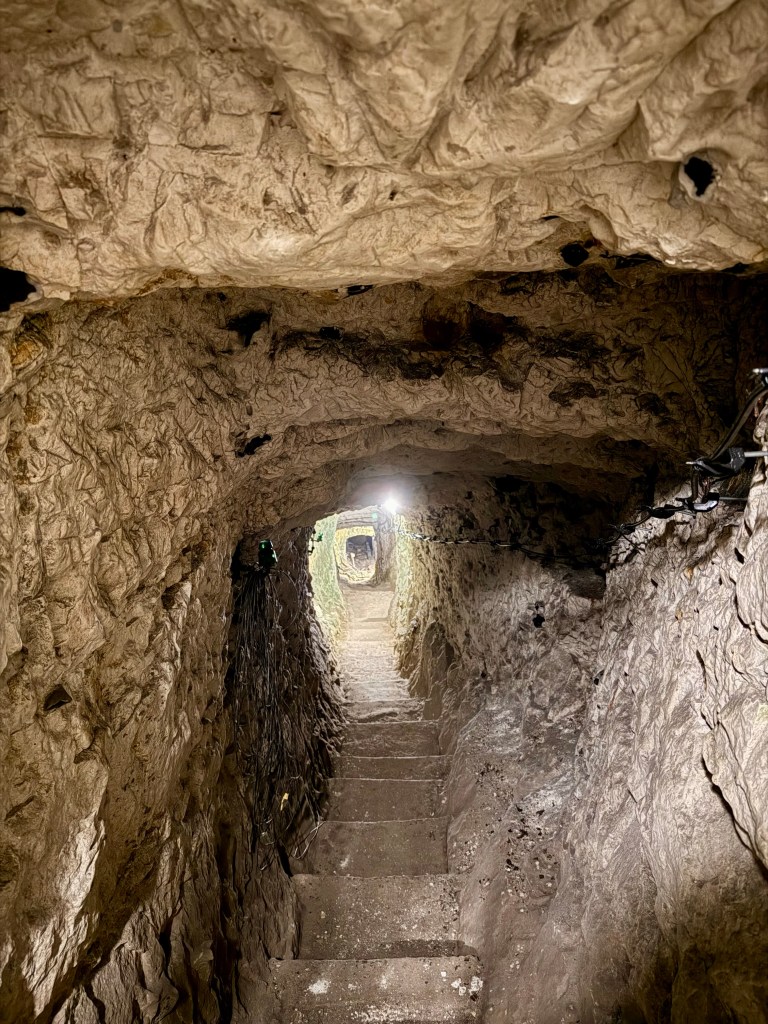
We then came above ground into an observation trench. These trenches were only 30 metres from the German observation trenches. And it was these trenches where the Canadians began their offensive. At that distance silence in the trenches meant life!
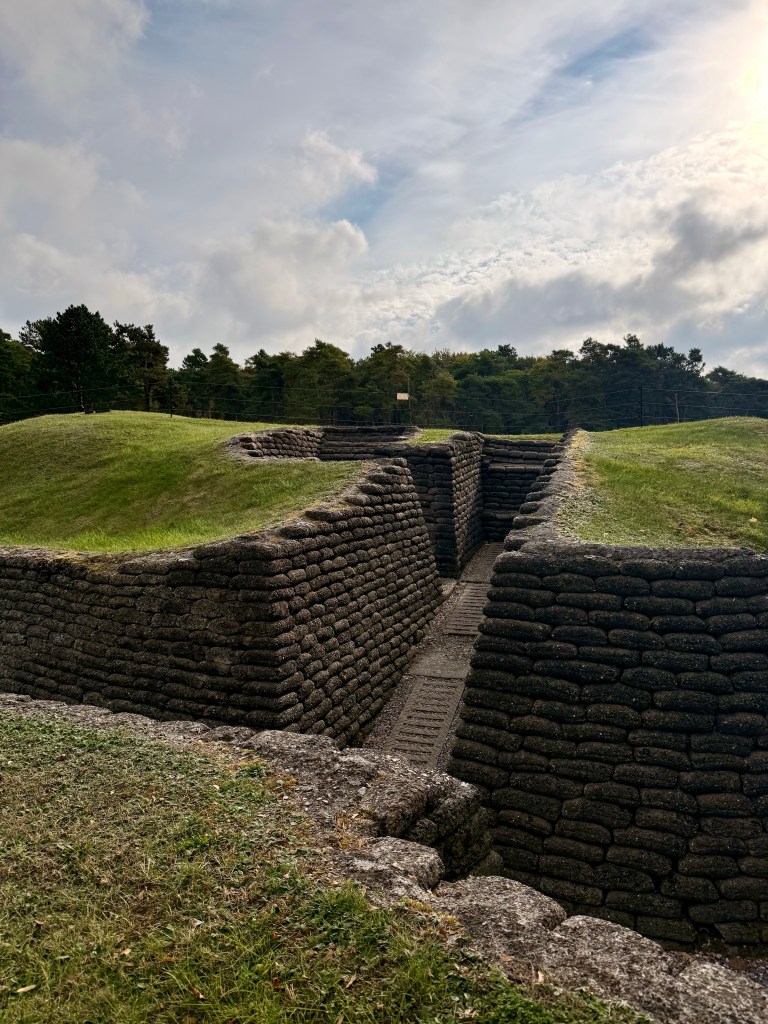
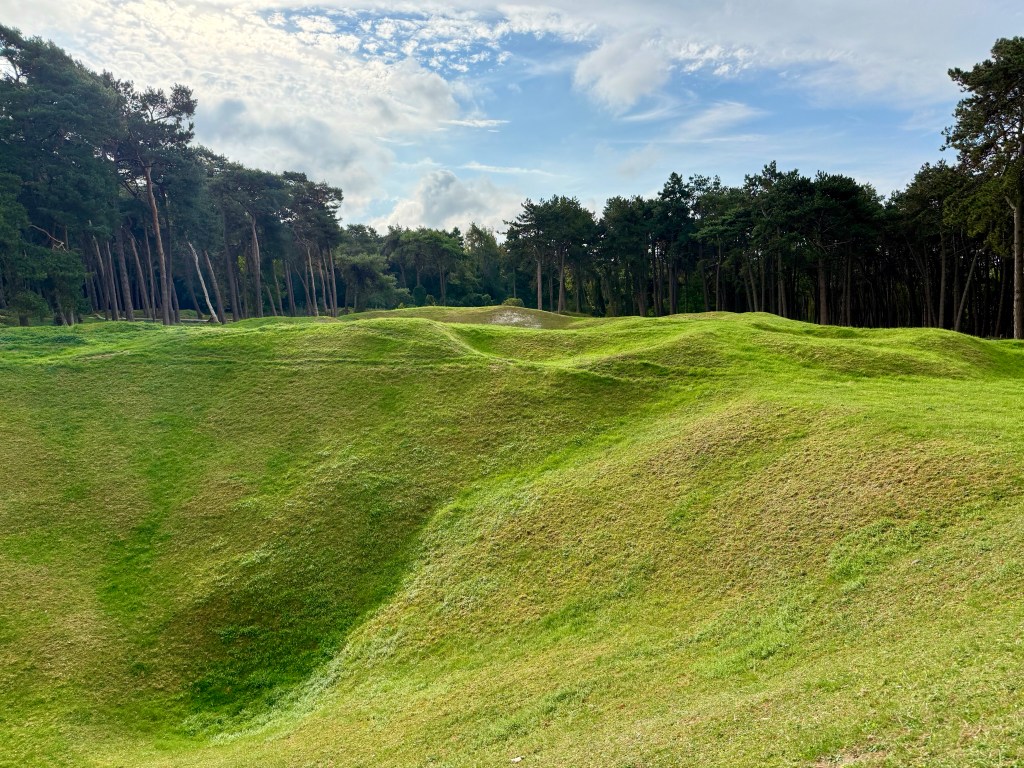
From the trenches we headed back to the visitors centre for a very informative viewing.
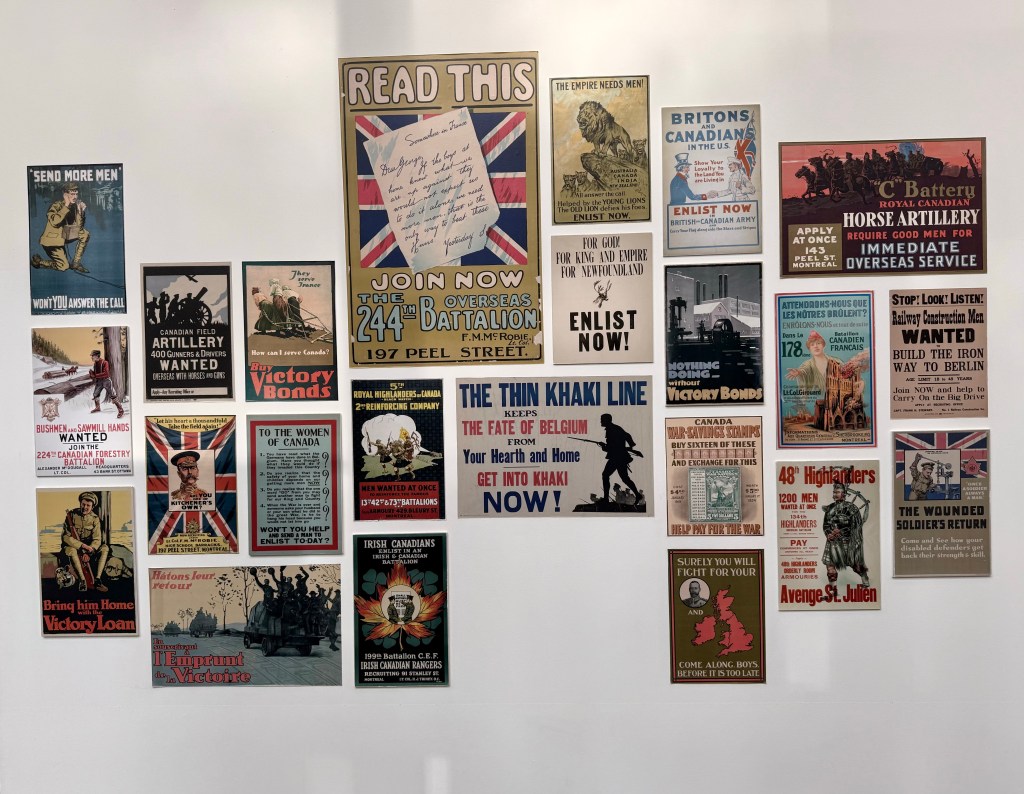
Lastly, we visited one of two cemeteries here.
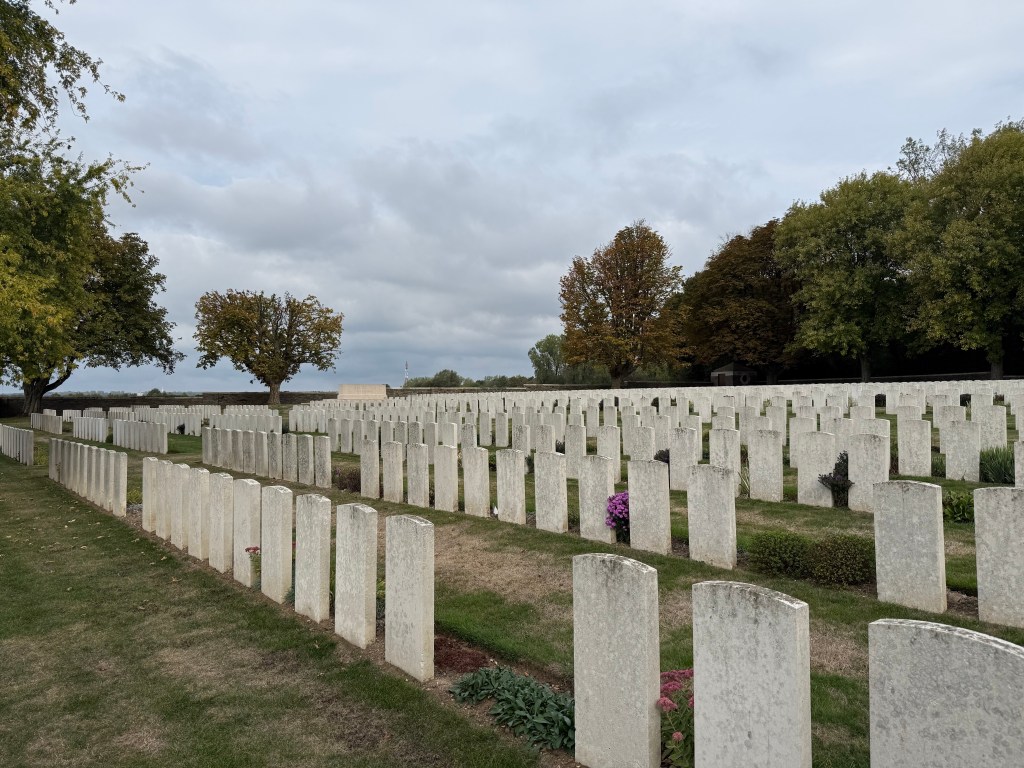
It was soon time to leave this hallowed memorial place.
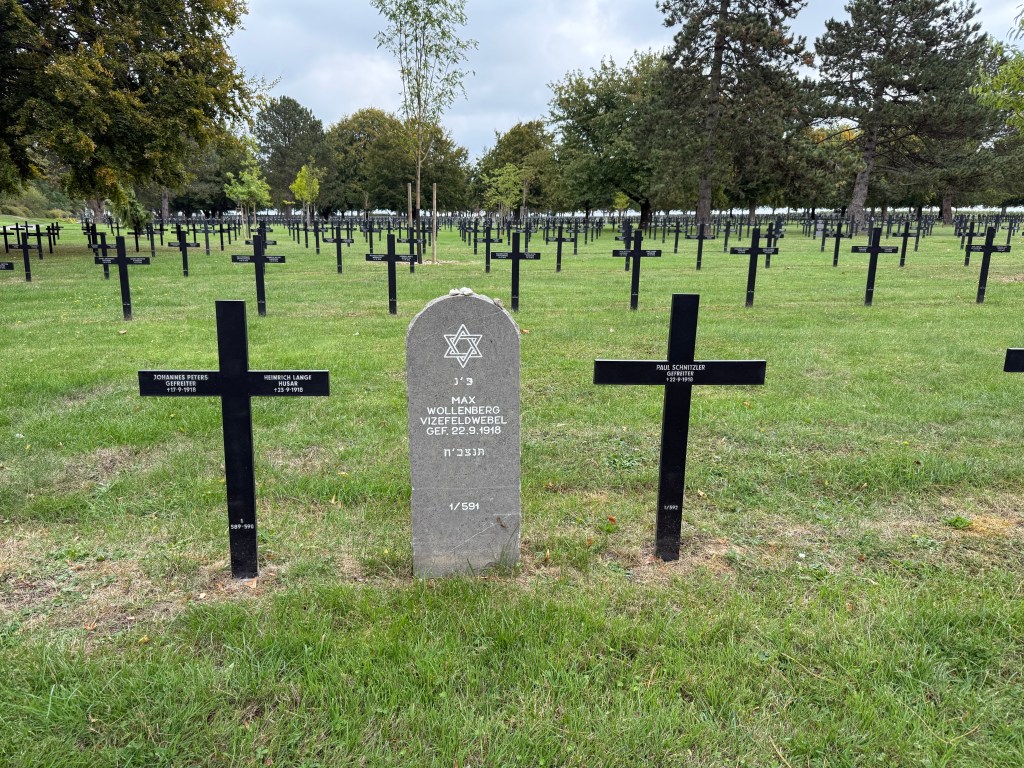
Our next stop was at Neville Saint Vaast. This is the largest German military cemetery in France with over 44,000 buried here. Interestingly, there were a number of Jewish soldiers here in the cemetery as well.
Our last stop was the Abbaye-du Mont-Saint-Ellis. This abbey was first built in the 7 th century, but after the French Revolution, the abbey was dissolved and parts of it were sold off and stone was quarried from it. Only 25 years later it suffered more indignities through bombing. Today, only the twin towers stand.
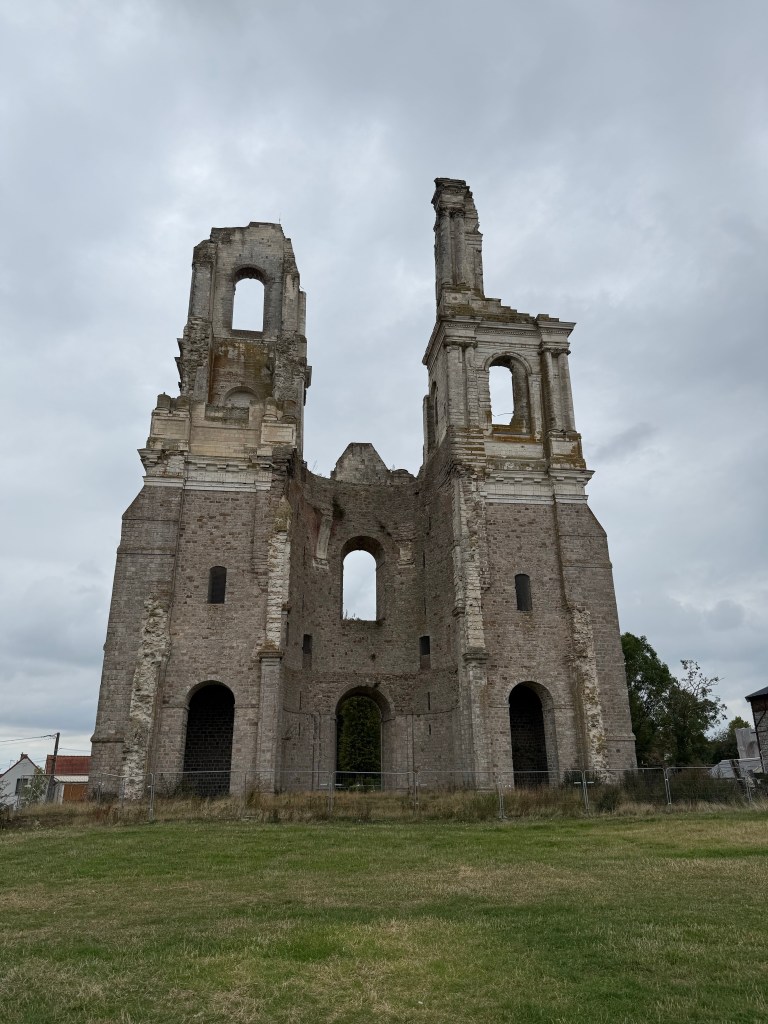
It has been another heavy day. With a lovely supper, we are retiring to plan what will be in store for us tomorrow. Until then.




Leave a Reply