
Another early day today as we had 2 plus hour drive to the Brittany coast destination of Mont Saint Michel. This ancient site was first built in the 8th century, inspired by a vision of Archangel Michael given to Bishop Aubert. In 708 the Bishop was asked in 3 dreams to build this place upon this rock. The bishop hesitated until the third vision when the archangel supposedly poked a hole in Aubert’s skull. He took the vision seriously then, and the first oratory was consecrated in 709. The oratory was named Mont Tombe.
When Charlemagne became the Holy Roman Emperor in 800, he inherited a deep devotion to Archangel Michael. To unite the sprawling wartorn countries he chose Saint Michael as the official patron protector of his empire. This geopolitical shift officially changed the island’s name to Mont Saint Michel.
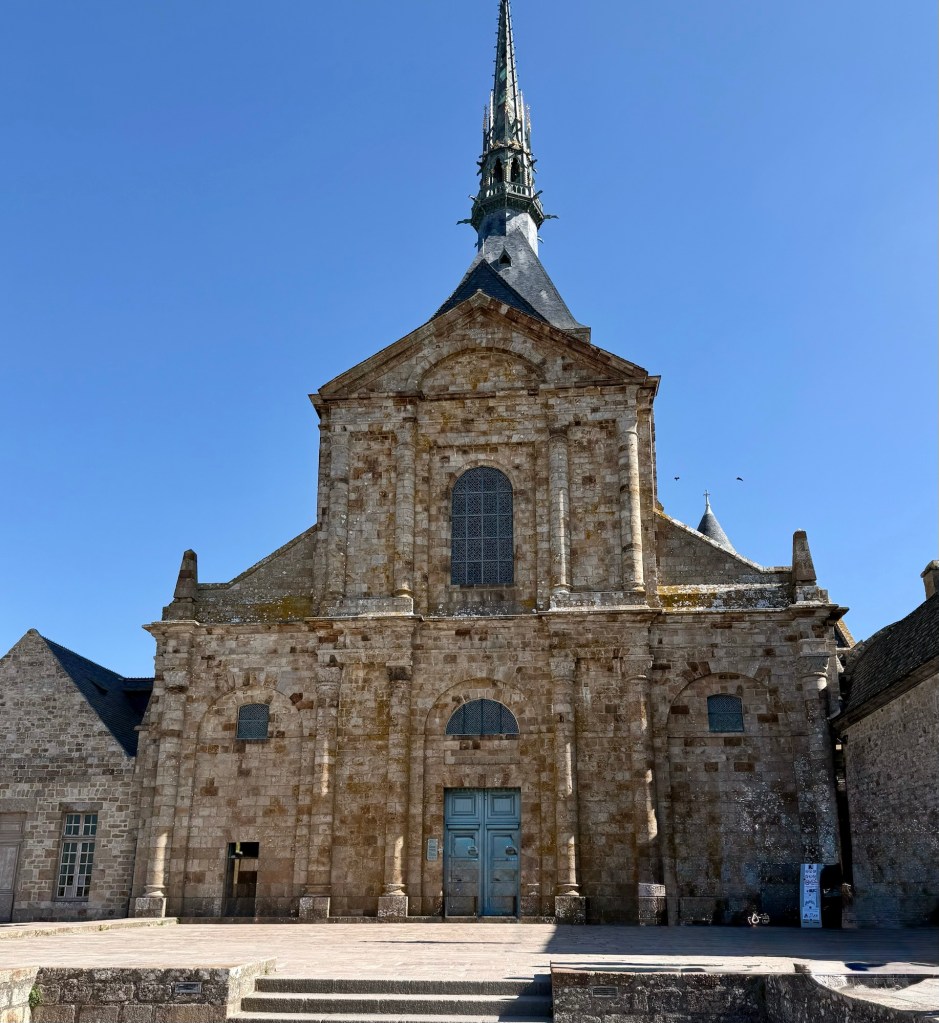
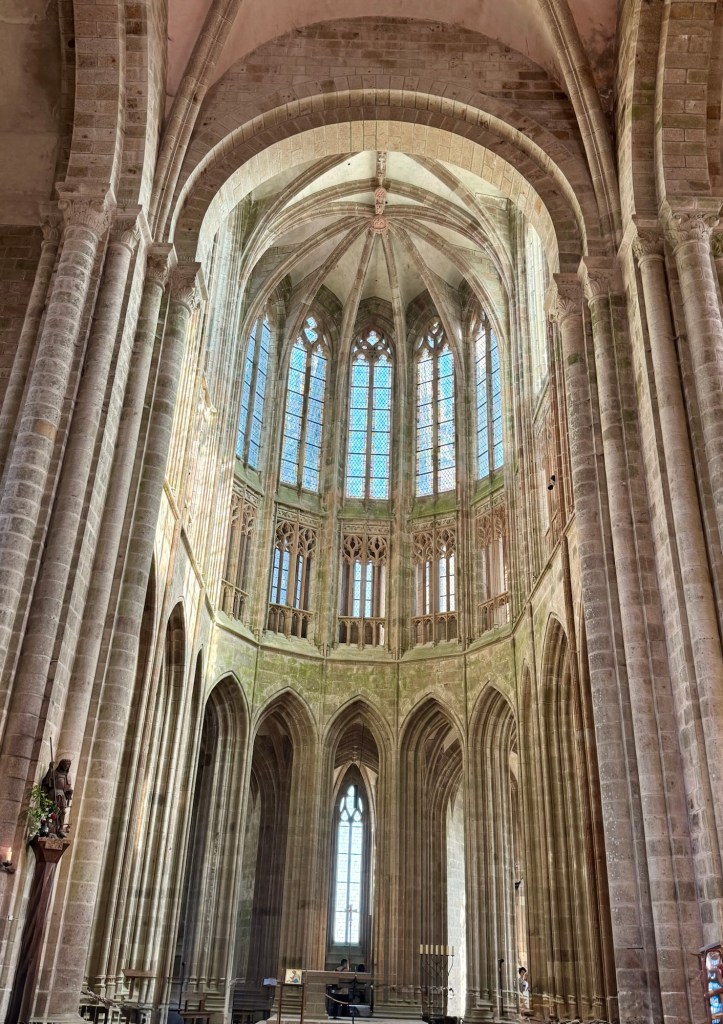
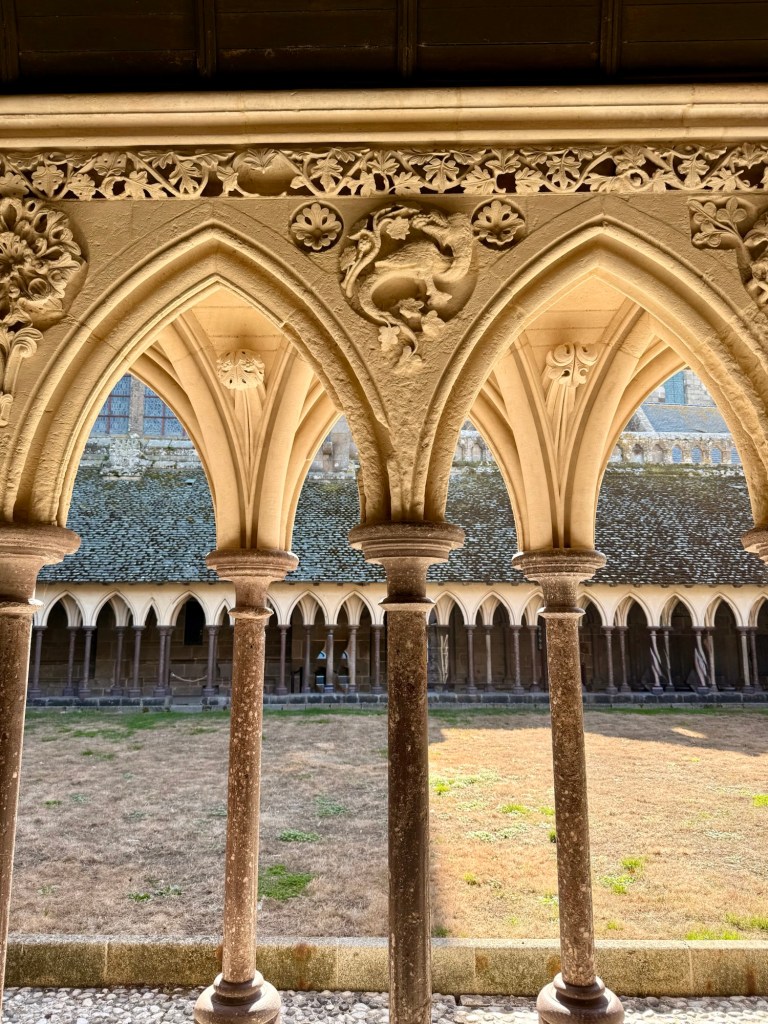
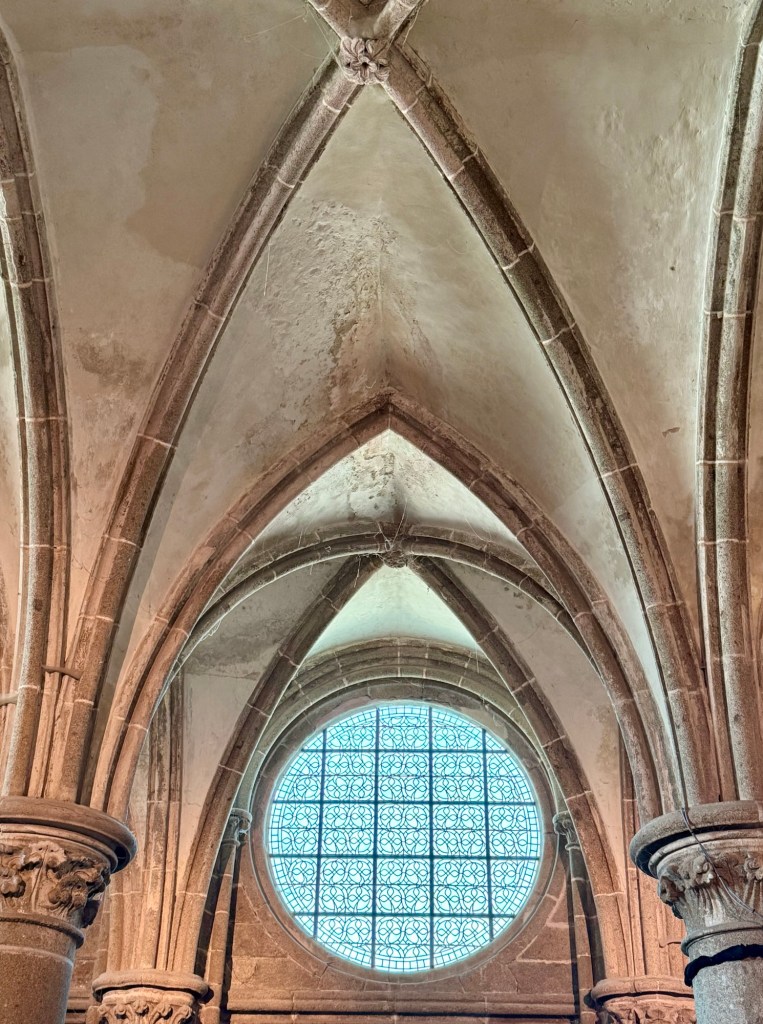
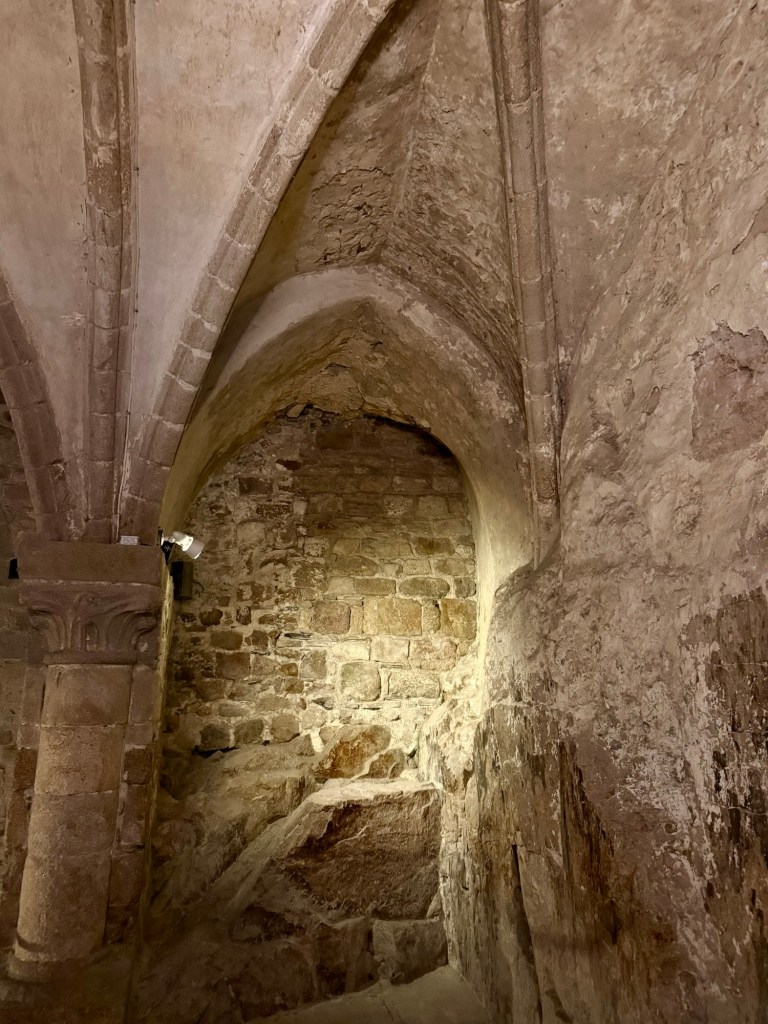
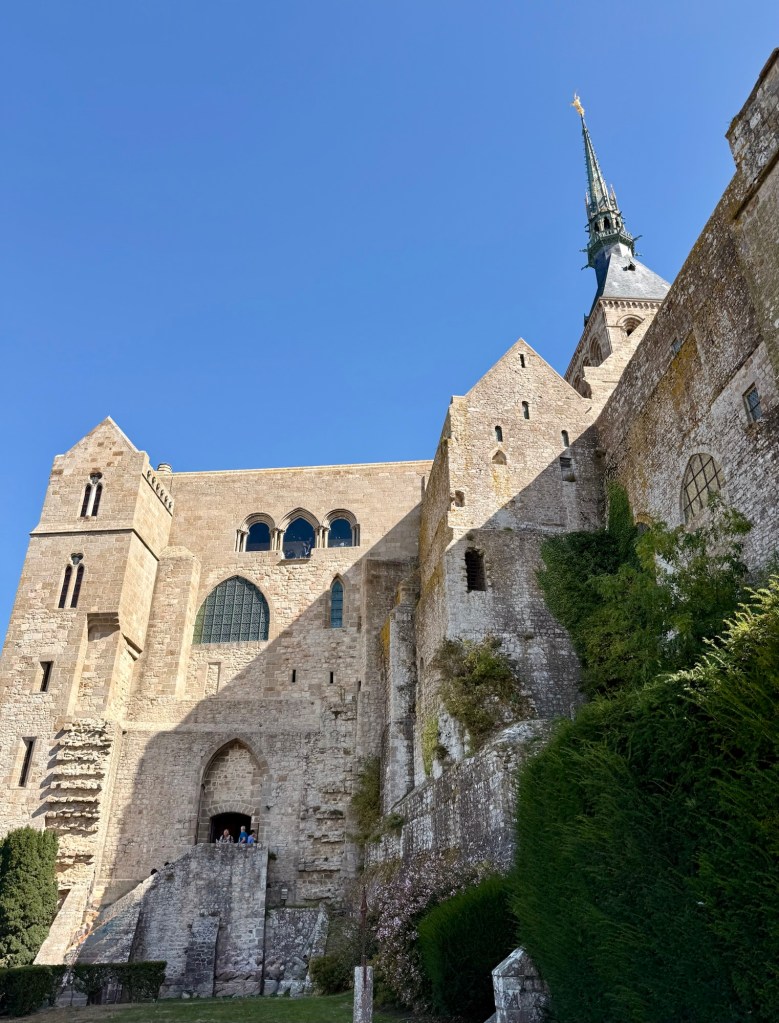
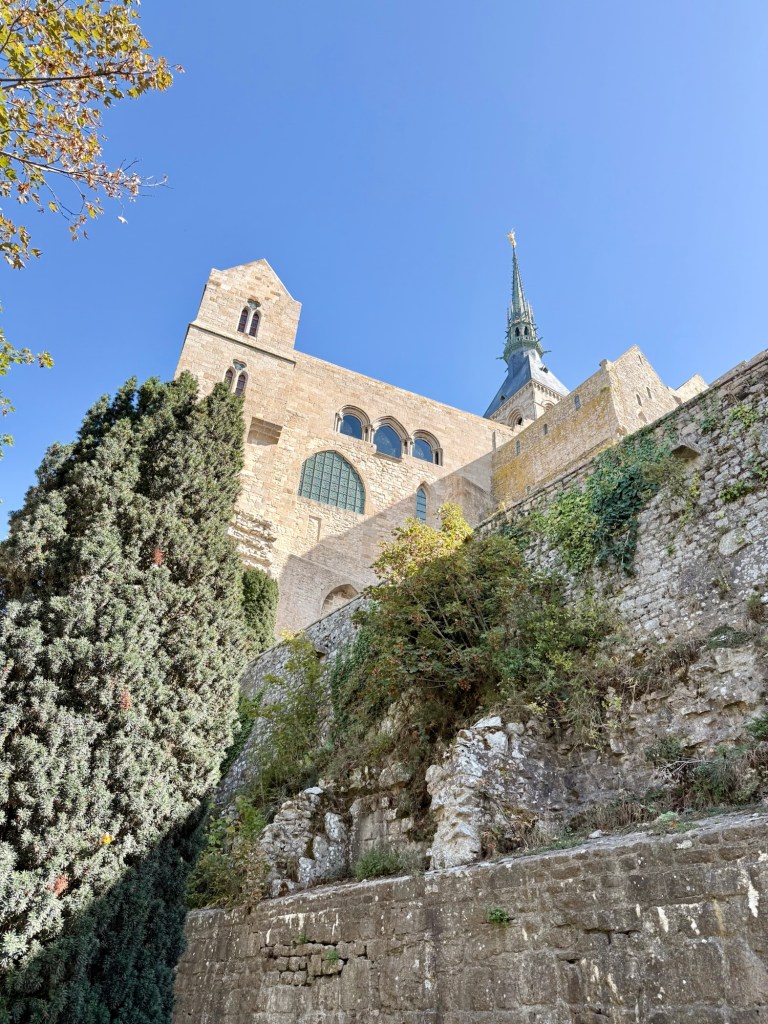
In 966, it was crowned with a Gothic style Abbey with the support of Richard I, Duke of Normandy. Here they established a community of Benedictine monks, turning this into an intellectual powerhouse, a thriving centre for copying manuscripts, and one of Christendom’s most vital pilgrimage sites drawing people from far and wide.
This pilgrimage destination was fraught with wars, and yet it survived the 100 year war between the English and the French. This victory elevated the mount into a powerful symbol of French national identity and resilience.
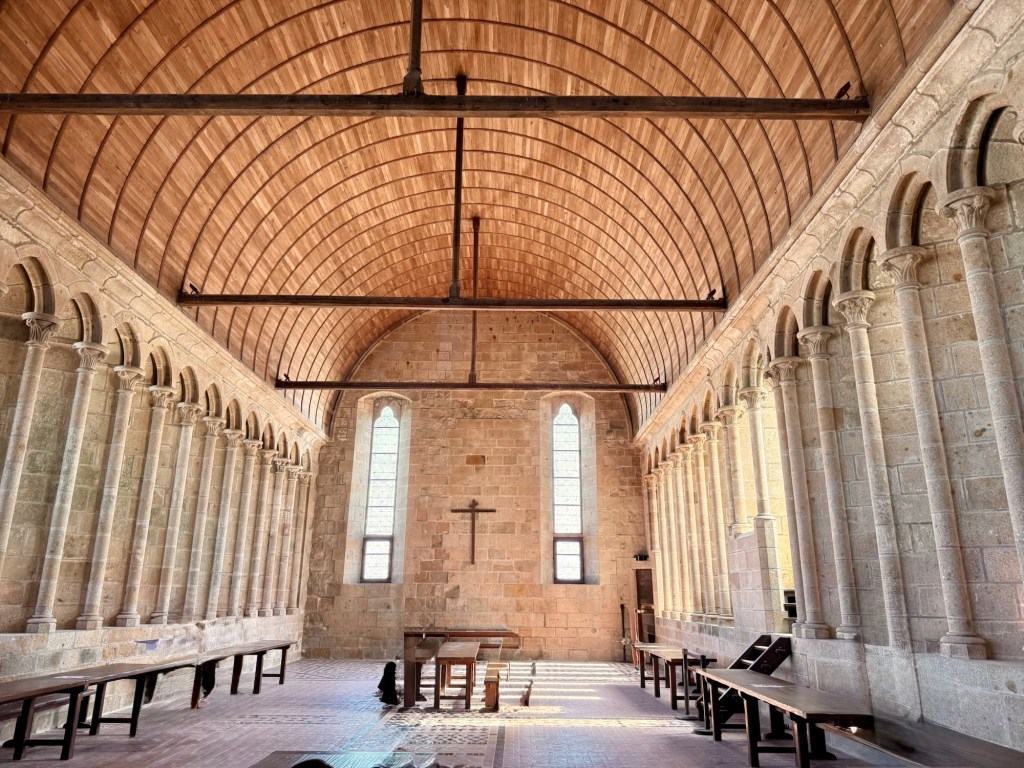
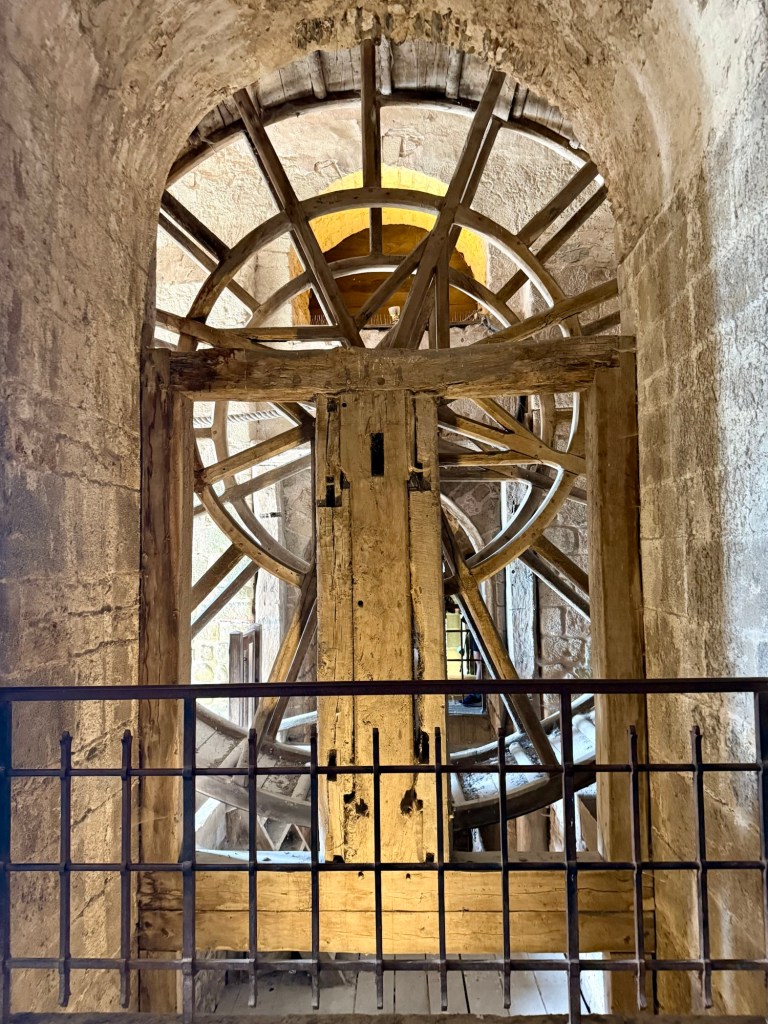
Following the French Revolution, the state confiscated all church properties. The Benedictine monks were driven out and the abbey was converted into a federal prison. Here the “Bastille of the Seas” held up to 14,000 prisoners. The interior spaces were butchered to accommodate this, however, it is said that this actually saved the building from ruin as many other Abbeys were quarried for their stone to build houses for the wealthy.
In 1863, a massive outcry ultimately forced Napoleon III to permanently close the prison and in 1874, France declared the Abbey as an historic monument. The finishing touch came in 1897 when a soaring neo_Gothic spire was constructed and capped with a gilded statue of Archangel Michael wielding a sword 500 feet above the sea.
It is now a UNESCO world heritage site, and has been the inspiration for Alan Lee’s illustrations for Minas Tirith in J.R.R.Tolkin’s books “the Lord of the Rings.
Now let’s visit this magical place.
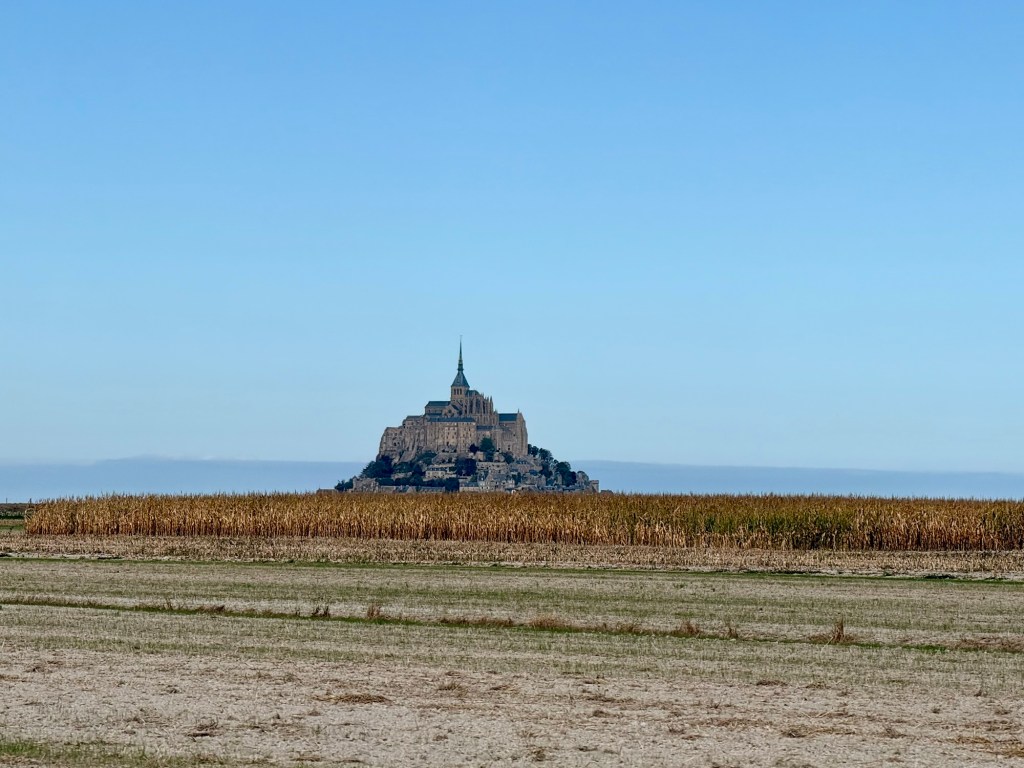
We soon parked our car in a parking lot at least at as big as Canada’s Wonderland in Toronto!. Apparently, this is France’s number one tourist attraction. The crowds were big, but nothing like they would be in the summer or on a weekend.
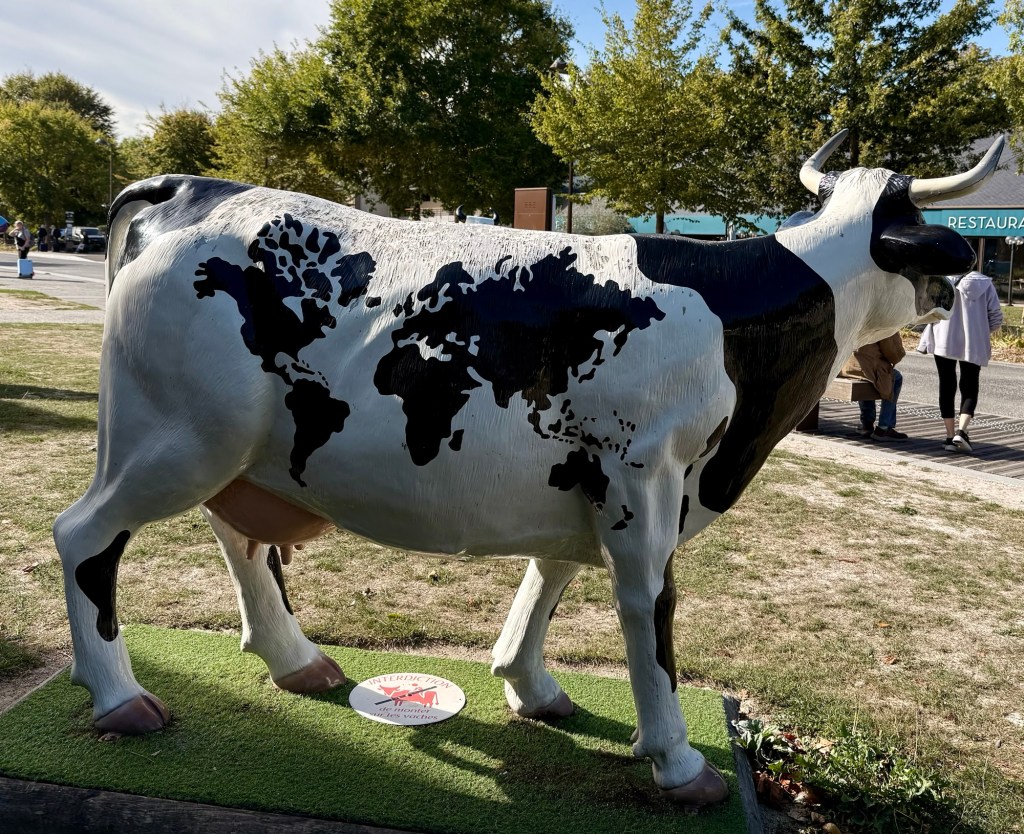
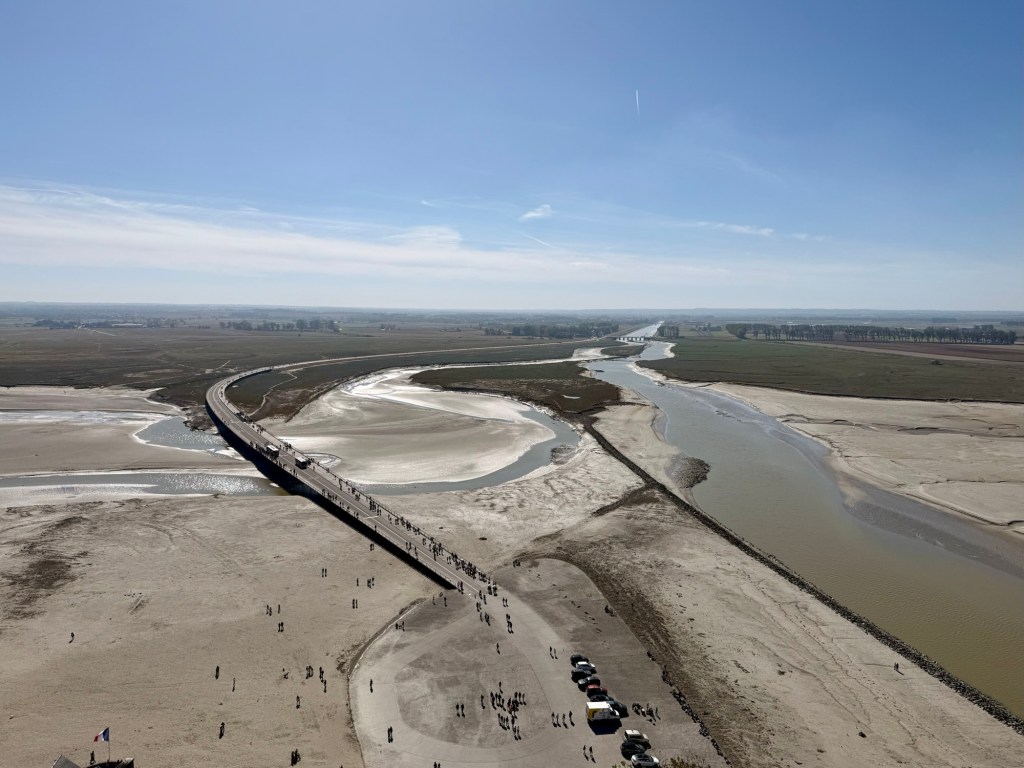
There were shuttle buses that would pick you up and drive you across a 2.4 km causeway to the island, but we walked into town to meet up with our friends, Brec, Sandy and Alan. They told us to follow the cows! We did that and soon found them enjoying a coffee in a cafe by another shuttle bus stop…
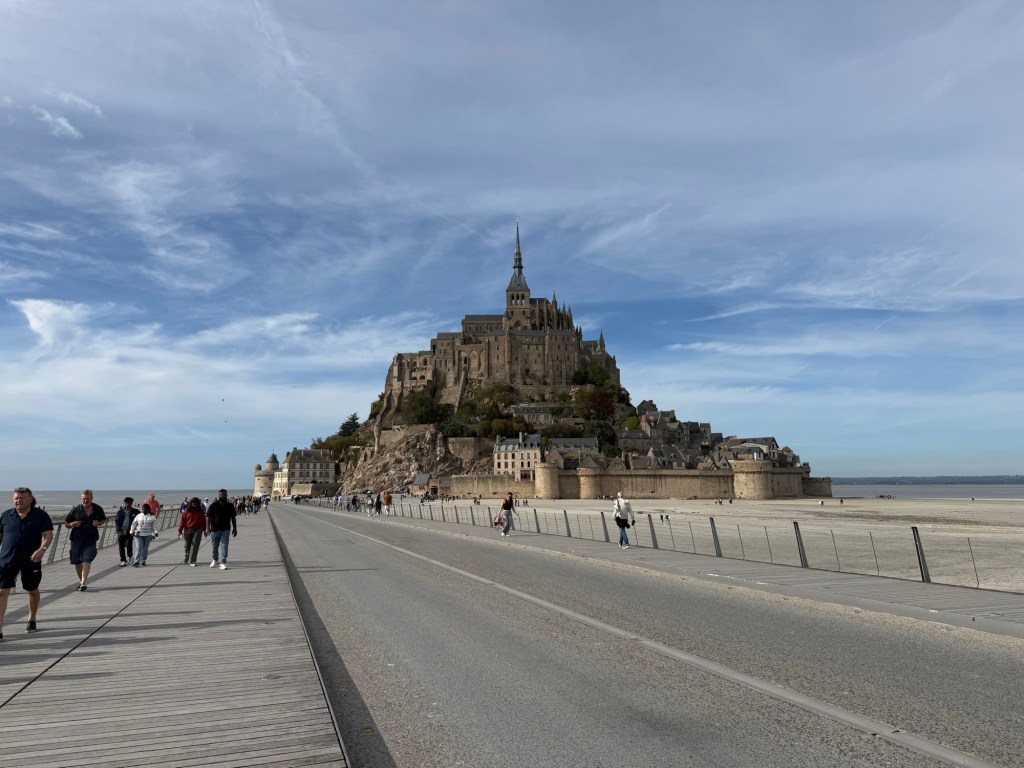
We soon boarded the Shuttle bus and were taken along the causeway to the entrance point for the island. This island has a village close to sea level where the fishermen and farmers once lived. As the levels went up, the workers became monks and then to the Cathedral where you felt like you could touch the heaven’s!
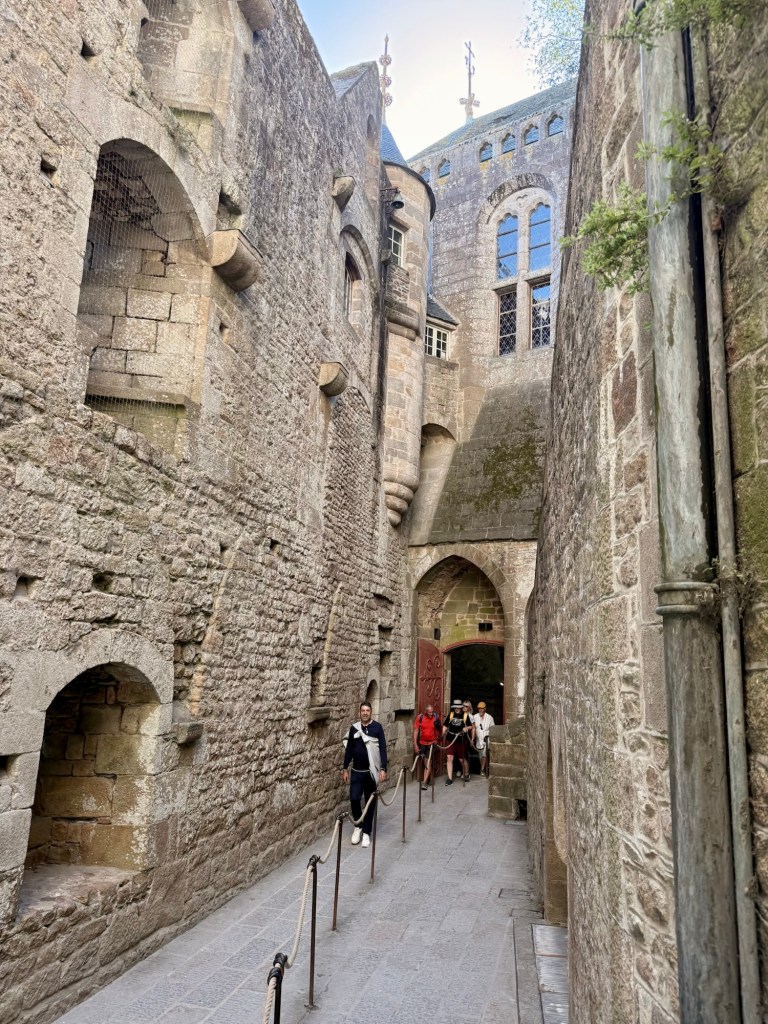
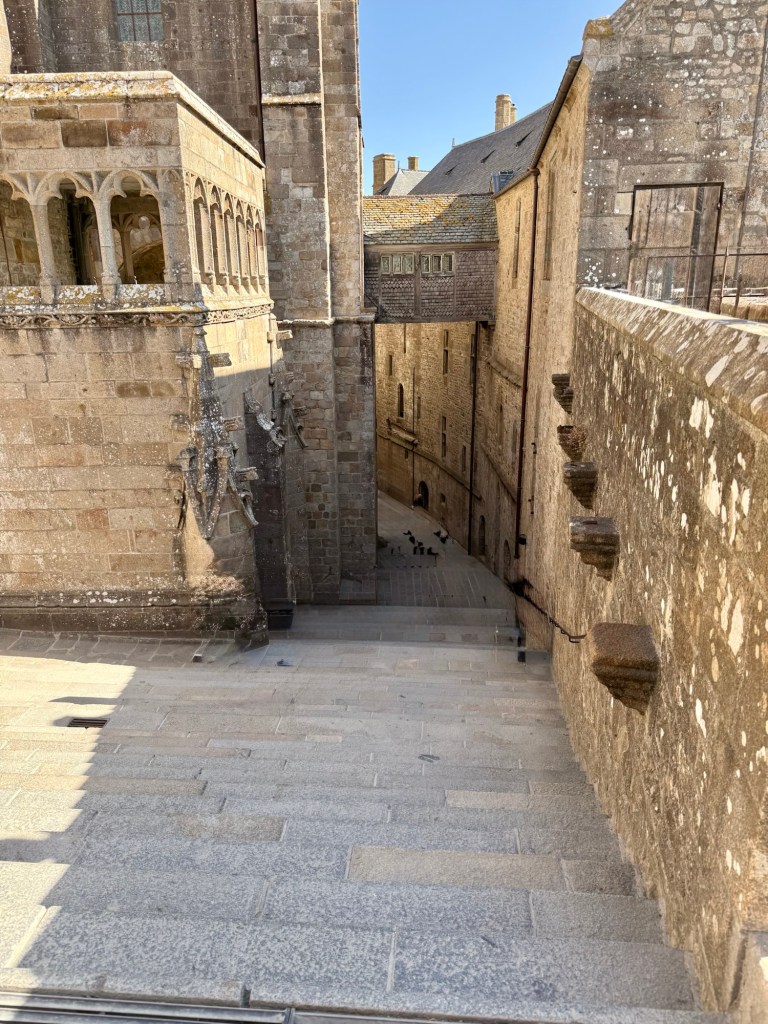
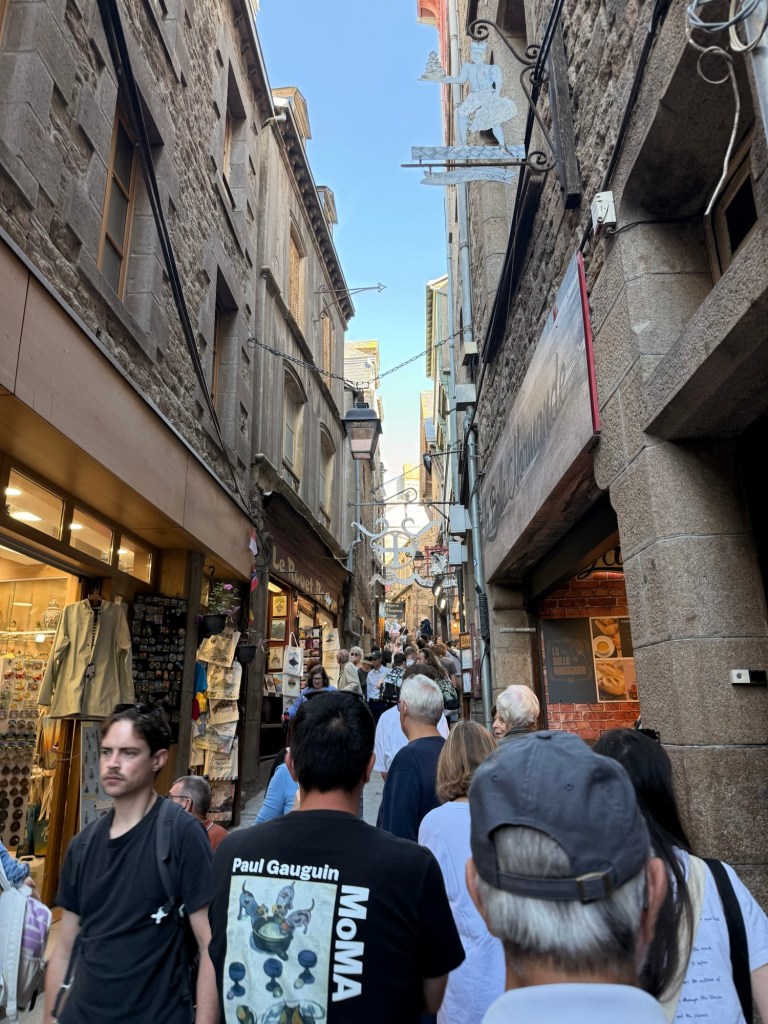
Once inside the gates, we started climbing. The entire village wound around the rock in a steep assent, with stairs occasionally coming into play. Once at the entrance to the Abbey itself, there was another 300 steps to climb to get to the Abbey church.
It was soon time to leave the Abbey and stop for a quick (late) lunch and then head back to the cars. We had a 2+ hour drive back to our B and B, and need to get packed up for another departure. This time our destination is a small village called Thelus that is almost within walking distance of Vimy Ridge. Indeed once there, we will be exploring many WWI battle sites. Perhaps I’ll tell you more about our plans tomorrow! Until then.





Leave a Reply